
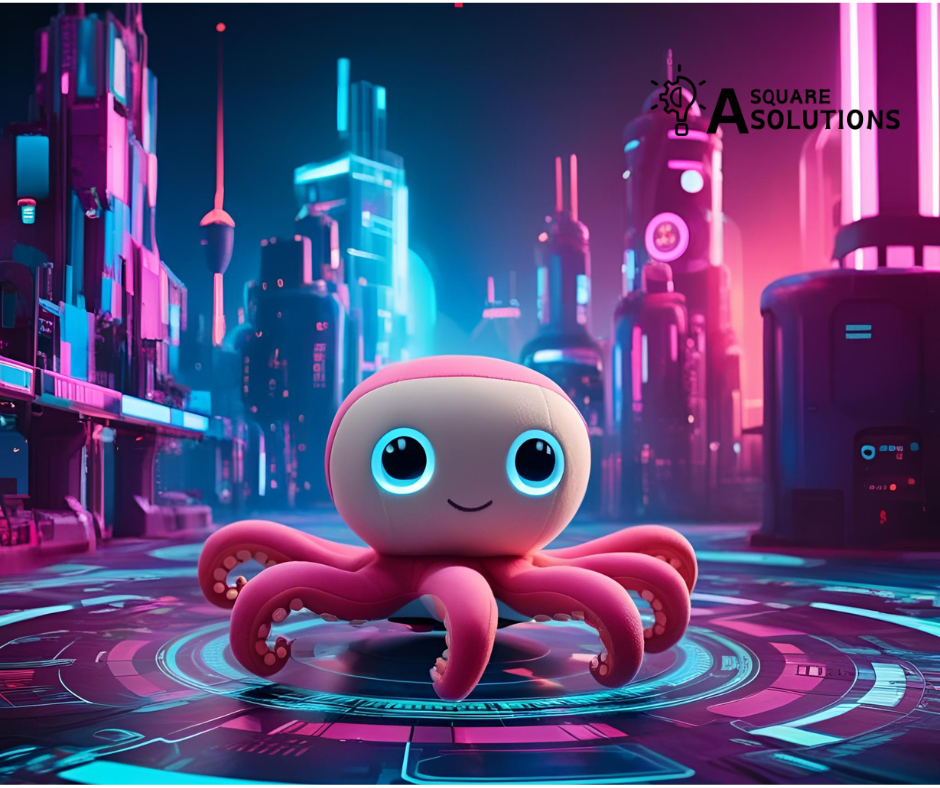
octobot revolution soft robot —
Introduction: When Nature Meets Cutting-Edge Robotics
Biomimicry, the design and production of materials, structures, and systems inspired by nature, plays a pivotal role in the evolution of robotics. Among various organisms, the octopus stands out as a remarkable example of adaptability and ingenuity. With its unique physiology, the octopus showcases features that are not only fascinating but also worthy of emulation in the world of robotics. The University of Bristol has taken inspiring steps in this direction, working towards the development of the Octobot, a soft robot that mimics the behaviors and capabilities of an octopus.
The Octobot is designed around the cephalopod’s decentralized nervous system, which allows these creatures to control their movements flexibly and effectively, without a centralized brain. This remarkable feature is integral to the Octobot, enabling it to exhibit behaviors similar to those of an octopus, such as manipulation, locomotion, and interaction with its environment. By harnessing the principles of soft robotics, researchers are unlocking new possibilities for these advanced robotic systems, equipping them with the ability to adapt and operate in diverse settings.
The Octobot is a soft robot inspired by octopus biology, showing how soft robotics can go far beyond traditional rigid machines.
The development of the Octobot is a testament to the advances in materials science and robotics. Utilizing soft, flexible materials, this robot can move elastically, allowing it to navigate through tight spaces and grasp objects delicately. Moreover, its biomimetic design offers durability and versatility, essential traits for deployment in various applications, such as search and rescue missions, medical devices, or underwater exploration. The Octobot embodies the promising intersection of nature and technology, showcasing how lessons drawn from biological organisms can lead to groundbreaking innovations in the robotic landscape.
You may also read our article on AI piloting robots on the International Space Station, which explores how autonomous robotics systems are transforming space exploration.
The Octopus Advantage: Nature’s Perfect Machine
The octopus, a remarkable marine creature, exhibits a range of unique biological features that position it as an extraordinary problem-solver. One of the defining characteristics of the octopus is its decentralized intelligence. Unlike traditional robotic systems, which often rely on a central processing unit, the octopus possesses a sophisticated nervous system where approximately two-thirds of its neurons are distributed throughout its arms. This allows each arm to function semi-independently, enabling it to carry out complex tasks simultaneously, such as capturing prey while monitoring its environment.
This decentralized control contrasts sharply with human-designed robots that typically follow a centralized model. In robotic engineering, the reliance on a singular processing unit can lead to bottlenecks in decision-making and response times, whereas the octopus can process information rapidly and react swiftly, making it an optimal example for bio-inspired robotics. The octopus’s arms are not only equipped with neurons but are also uniquely structured to exhibit a remarkable range of motion and flexibility, further enhancing their capability to solve problems in dynamic environments.
As researchers delve deeper into the biology of the octopus, they unlock potential pathways to create more sophisticated robotic systems that can mimic these natural adaptations. The study of octopus behavior and physiology not only provides a better understanding of their exceptional problem-solving capabilities but also serves as a blueprint for the future of robotics, pushing the boundaries of what machines can achieve in real-world scenarios.
We also discussed intelligent autonomous systems in our article on agentic AI systems, which explains how AI-powered machines learn and make decisions independently.
Key Features of the Octobot Soft Robot
The Octobot represents a significant advancement in the field of soft robotics, inspired by the remarkable capabilities of the biological octopus. With the objective of emulating its natural counterpart, the Octobot incorporates several innovative features that facilitate movement control and manipulation strategies, showcasing its potential advantages over traditional, rigid robots.
One of the most intriguing aspects of the Octobot is its use of distributed microprocessors. Unlike conventional robots that rely on central processing units, the Octobot integrates multiple microprocessors across its structure, enabling localized decision-making. This decentralized control mimics the neural architecture of an octopus, allowing for complex movements that can adapt swiftly to varying environments. Just as an octopus can navigate through tight spaces with fluidity, the Octobot is designed to move in a similarly flexible manner, enhancing its operational versatility.
Another standout feature of the Octobot is its 3D-printed ‘smart suckers’. These advanced components enable the robot to grip and manipulate objects akin to an octopus using its tentacles. Each sucker can independently exert varying amounts of force, facilitating delicate handling of diverse items without causing damage. This multi-functional gripping capability is a significant improvement over traditional robotic grippers, making the Octobot particularly well-suited for tasks that require a high degree of dexterity and precision.
Moreover, the ability of the Octobot to rapidly adapt to its environment sets it apart from classic robots. This adaptability stems from its soft body, which can change shape and behavior in response to external stimuli, allowing it to tackle unpredictable situations effectively. By mimicking the octopus’s extraordinary skills of camouflage and sensory feedback, the Octobot enhances its problem-solving capabilities in real-time. Through this comparative analysis, the unique advantages of the Octobot become evident, highlighting its potential to revolutionize soft robotics and broaden the scope of applications in various fields.
For scientific research on octopus intelligence and cephalopod biology, visit National Geographic’s Octopus Research.
Engineering Breakthrough: The Neural Lattice
The Octobot represents a significant advancement in soft robotics, melding engineering ingenuity with biological inspiration. At the heart of this revolutionary design lies the concept of the neural lattice, an innovative framework enabling real-time adaptability. This neural lattice comprises modular ‘neural nodes’, functioning similarly to biological neurons, allowing the Octobot to process information and respond to its environment dynamically.
One of the distinguishing features of the Octobot is its self-healing silicone skin. This advanced material technology not only mimics the resilience of cephalopod skin but also enhances the robotic structure’s durability. When the Octobot sustains minor damages, the self-healing skin can repair itself, thus allowing continual functionality without the need for manual intervention. This capability is crucial for applications where exposure to the external environment could lead to wear and tear, ensuring longevity and reliability in various scenarios.
Furthermore, the integration of phase-change actuators in the Octobot’s design represents a groundbreaking achievement in soft robotics. These actuators allow the robot to change shape and stiffness, simulating the fluid movement patterns typical of cephalopods. Such flexibility is essential for navigating complex terrains and manipulating objects, thereby expanding the potential applications of this technology beyond simple tasks to more intricate interactions with its surroundings.
To enhance the Octobot’s intelligence, AI-powered autonomy is woven into its framework. Through reinforcement learning and computer vision, the Octobot continuously learns from its interactions, adapting its behavior based on experience. By processing visual data, it can better understand its environment and make informed decisions, revolutionizing the capabilities of soft robots. This combination of advanced materials, innovative engineering, and intelligent design underscores the remarkable technological feats achieved in creating the Octobot, positioning it as a frontrunner in the future of robotics.
You may also be interested in our analysis of AI agents replacing traditional software, which highlights how advanced AI systems are reshaping modern computing.
Real-World Applications
💬 Have a question? Try our AI assistant — bottom right corner.
🚀 A Square Solutions
We specialise in AI Deployment & Workflow Automation — helping businesses scale through AI and intelligent digital systems.
Frequently Asked Questions
What is Introduction?
Related: AI safety governance AI training innovation AI geopolitics AI economic impact Biomimicry, the design and production of materials, structures, and systems inspired by nature, plays a pivotal role in the evolution.
What is The Octopus Advantage?
The octopus, a remarkable marine creature, exhibits a range of unique biological features that position it as an extraordinary problem-solver.
What is Engineering Breakthrough?
The Octobot represents a significant advancement in soft robotics, melding engineering ingenuity with biological inspiration.
What is Real-World Applications?
2026 Strategic Resources: New Diamond Bonding Technique Future Devices Ai Driven Mobile Robots Team Up To Tackle Chemical Synthesis Cms Experiment Sheds New Light On W Boson Mass Mystery The Physics Communitys Long Stand.
Sources: MIT Technology Review | TechCrunch
💬 Questions about this topic?
Use the 🤖 Ask Our AI widget (bottom-right) — instant answers, 24/7.