
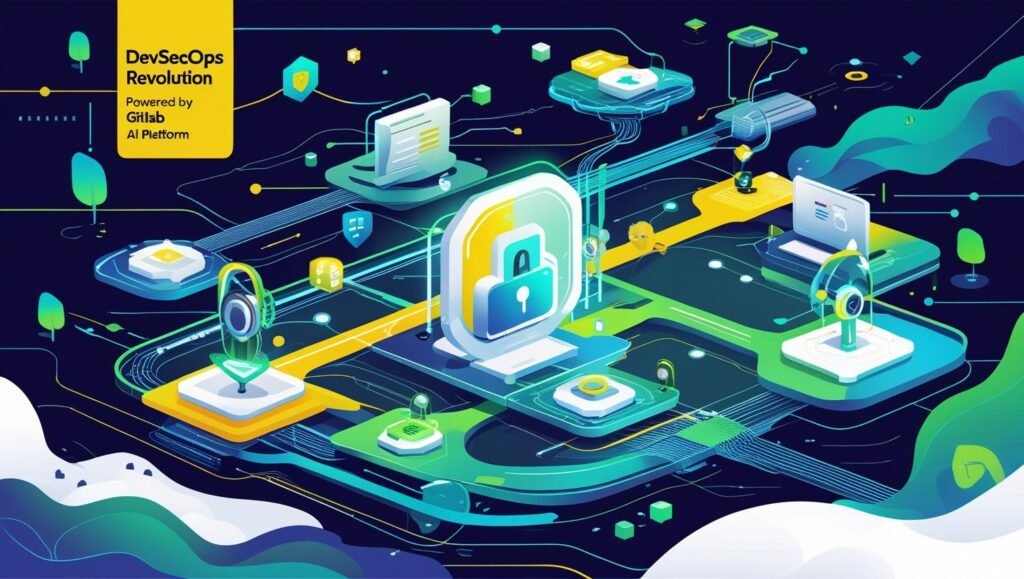
DevSecOps Revolutionized: GitLab’s AI-Powered Platform Integrates Security Seamlessly

In the realm of software development, the integration of security into the development lifecycle has become increasingly crucial. DevSecOps, the practice of integrating security into the development process, aims to eliminate the traditional silos between development and operations teams, fostering a culture of shared responsibility for security.
This shift reflects a broader transformation in which AI is being embedded directly into operational software environments, a trend already visible in how AI agents are reshaping traditional applications.
GitLab, a leading provider of DevOps lifecycle management solutions, has unveiled groundbreaking AI capabilities that revolutionize DevSecOps practices. By seamlessly integrating AI into its platform, GitLab empowers development teams to build secure software faster, without compromising on quality or innovation.
This model mirrors enterprise adoption patterns where security, analytics, and automation are unified to deliver measurable ROI, similar to insights discussed in AI investment performance analysis.
The Challenges of Traditional DevSecOps
Traditional DevSecOps approaches often face challenges in integrating security into the development workflow. Security assessments and audits often occur late in the development cycle, leading to delays, rework, and increased costs. Additionally, traditional security tools can be complex and time-consuming to use, creating friction for developers.
Organizations addressing these inefficiencies are increasingly adopting integrated automation strategies aligned with modern AI-led digital transformation frameworks.
GitLab’s AI-Powered DevSecOps Solution
GitLab’s AI-powered platform addresses these challenges by embedding security into the development process from the start. AI capabilities are integrated into various aspects of the platform, providing developers with real-time feedback and automated remediation suggestions throughout the development lifecycle.
Key AI-Powered Features
GitLab’s AI-powered DevSecOps solution offers several key features that empower developers to build secure software faster:
AI-powered static application security testing (SAST):
SAST tools analyze source code to identify potential security vulnerabilities. GitLab’s AI-powered SAST provides real-time feedback to developers, enabling them to address vulnerabilities as they code.These practices align with secure development standards recommended by OWASP security guidelines, which emphasize early vulnerability detection within the software lifecycle.
AI-powered dependency scanning:
Dependency scanning tools identify insecure third-party libraries and components used in software applications. GitLab’s AI-powered dependency scanning automatically detects vulnerabilities in dependencies and suggests mitigation strategies.Modern DevSecOps pipelines are also being mapped to risk management frameworks such as NIST’s cybersecurity framework, ensuring governance alongside automation.
AI-powered container security:
Container security tools analyze container images to detect vulnerabilities and misconfigurations. GitLab’s AI-powered container security automatically scans container images and provides remediation guidance.
AI-powered threat detection and response:
GitLab’s AI-powered threat detection and response capabilities continuously monitor software applications for suspicious activity and provide alerts to security teams.
Revolutionizing DevSecOps
GitLab’s AI-powered platform is revolutionizing DevSecOps practices by seamlessly integrating security into the development workflow. By providing real-time feedback, automated remediation suggestions, and continuous threat monitoring, GitLab empowers developers to build secure software faster without compromising on innovation.
For many organizations, these integrations move from concept to execution through structured deployment models and real-world validation via implementation-driven case studies.
Benefits of GitLab’s AI-Powered DevSecOps
The benefits of GitLab’s AI-powered DevSecOps include:
By identifying and addressing security vulnerabilities early in the development cycle, GitLab helps reduce the risk of security breaches and data leaks.
Increased developer productivity:
By providing real-time feedback and automated remediation suggestions, GitLab helps developers resolve security issues efficiently, reducing time spent on rework.
GitLab’s AI-powered platform helps organizations maintain a strong security posture by continuously monitoring software applications for threats and providing proactive remediation guidance.
As software ecosystems evolve, security-enabled AI pipelines are becoming foundational to next-generation application development rather than an optional enhancement. GitLab’s AI-powered platform represents a significant step forward in the evolution of DevSecOps. By seamlessly integrating security into the development process, GitLab empowers development teams to build secure software faster, enhance collaboration between development and security teams, and ultimately deliver more secure and reliable software products. As AI continues to evolve, GitLab’s AI-powered DevSecOps solution will play an increasingly crucial role in shaping the future of secure software development.
Technical documentation on integrated DevSecOps automation can also be explored through GitLab’s DevSecOps architecture overview.