🤖 Agentic AI Systems: How Autonomous AI Is Learning to Act on Its Own
📺 Watch: Website Automation & Time Freedom 🚀 Build Systems That Make Money
📚 Further Reading
Prefer to have experts handle this? A Square Solutions offers professional AI automation services for growing businesses.
📺 Are AI Systems Acting Beyond Human Control?
📺 Are AI Systems Acting Beyond Human Control?
Agentic AI systems are redefining what artificial intelligence means in 2025.
Until recently, AI systems responded to prompts. They answered questions, generated text, or predicted outcomes — but they waited for humans to guide every step. Agentic AI systems break that limitation. These systems set goals, plan actions, execute tasks, and adapt based on results.
This shift marks a fundamental change: AI is no longer just assisting humans. It is acting independently.
🧠 What Are Agentic AI Systems?
Agentic AI systems are autonomous AI architectures designed to:
Understand high-level goals
Break them into sub-tasks
Choose tools and strategies
Execute actions without constant supervision
Unlike traditional AI models, agentic systems operate continuously, making decisions in dynamic environments. This is why agentic AI systems are considered the bridge between today’s AI tools and future general intelligence.
⚙️ How Agentic AI Systems Work
At a technical level, agentic AI systems combine:
Large language models
Memory and context storage
Planning and reasoning layers
Feedback loops
These components allow AI agents to evaluate outcomes and adjust behavior over time. Instead of executing a single instruction, the system manages an entire workflow autonomously.
This same architectural shift is also driving changes across technology, including how AI agents are replacing software by eliminating the need for manual interfaces
🏢 Real-World Uses of Agentic AI Systems
In 2025, autonomous AI agents are already being deployed in:
Customer support automation
Marketing campaign optimization
Software testing and debugging
Financial analysis and forecasting
Enterprises are adopting agentic AI not to replace teams overnight, but to scale decision-making and execution beyond human limits.
🧠 Why goal-driven AI models Are Different From Chatbots
Chatbots respond.
Agentic AI systems act.
A chatbot may suggest steps. An agentic system performs them. It logs into tools, schedules actions, triggers workflows, and evaluates success metrics — all without waiting for approval at every step.
This difference explains why next-generation AI agents are rapidly becoming a core focus for AI research and investment.
🌐 Big Tech’s Push Toward Agentic AI
Major AI labs are openly prioritizing agentic architectures.
OpenAI, Google DeepMind, and Anthropic are building systems that emphasize autonomy, long-term planning, and tool use. Google has highlighted autonomous agents as a critical part of its AI roadmap
⚠️ Risks and Challenges of self-directed AI systems
Despite their promise, self-directed AI systems raise serious concerns:
Loss of human oversight
Cascading errors at scale
Accountability gaps
Security vulnerabilities
Experts warn that autonomous AI must be carefully constrained to prevent unintended outcomes — a challenge already visible in large-scale AI content generation, as explored in AI Now Writes Most of the Internet
🔐 Who Is Responsible When AI Acts?
As next-generation AI agents gain autonomy, responsibility becomes unclear.
If an AI agent makes a harmful decision:
Is the developer responsible?
The company deploying it?
Or the AI system itself?
These questions are driving global discussions around AI governance, safety frameworks, and regulation.
🔮 The Future of Agentic AI Systems
Over the next decade, next-generation AI agents are expected to:
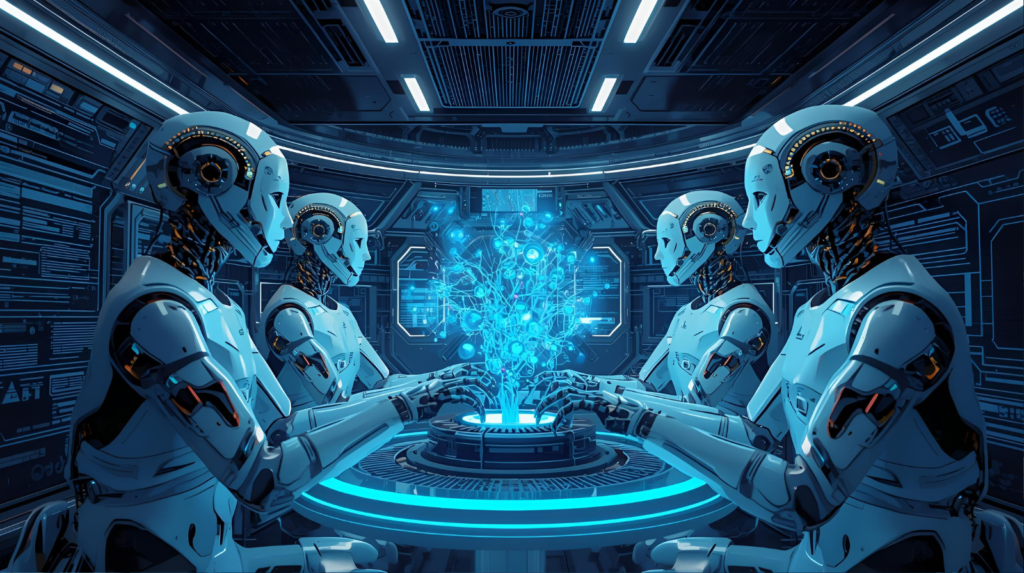
Coordinate other AI agents
Operate continuously without prompts
Become embedded in business infrastructure
Human roles will shift from operators to supervisors and strategists, overseeing systems that act independently.
🧠 Final Thoughts
Agentic AI systems represent one of the most important transitions in artificial intelligence.
This is not incremental improvement.
It is a shift from tools to actors.
How we design, regulate, and deploy these systems will shape the future of technology, work, and society itself.