
past present future —
AI Past, Present, and Future
The Past

The history of artificial intelligence (AI) can be traced back to the early 1950s, when Alan Turing proposed the Turing Test, a test of a machine’s ability to exhibit intelligent behavior equivalent to, or indistinguishable from, that of a human. In 1956, John McCarthy coined the term “artificial intelligence” at a conference at Dartmouth College.
In the early years of AI research, researchers focused on developing machines that could solve complex problems, such as playing chess and proving mathematical theorems. However, by the late 1960s, it became clear that this approach was not going to be successful. AI researchers were unable to develop a general theory of intelligence, and the AI systems that they were developing were very narrow in their capabilities.
In the 1970s, there was a period of disillusionment with AI, known as the “AI winter.” This was because researchers were unable to achieve the early goals of AI, such as developing machines that could think like humans.
However, research continued, and in the 1980s and 1990s, there was a resurgence of interest in AI. This was due to a number of factors, including the development of more powerful computers, the availability of more data, and the development of new AI algorithms.
One of the most important developments in AI in the 1980s was the development of expert systems. Expert systems are AI systems that are designed to solve problems in a specific domain, such as medicine or law. Expert systems were used in a variety of applications, including medical diagnosis, fraud detection, and financial forecasting.
In the 1990s, there was a growing interest in machine learning. Machine learning is a type of AI that allows computers to learn from data without being explicitly programmed. Machine learning algorithms have been used to develop a wide variety of AI applications, including spam filters, product recommendation systems, and self-driving cars.
The Present

Today, AI is used in a wide variety of applications, including:
- Self-driving cars: AI is used to develop self-driving cars that can navigate the road without human input.
- Medical diagnosis: AI is used to develop systems that can help doctors diagnose diseases more accurately.
- Fraud detection: AI is used to develop systems that can detect fraudulent transactions.
- Machine translation: AI is used to develop systems that can translate languages more accurately.
- Recommendation systems: AI is used to develop systems that can recommend products or services to users based on their past behavior.
- Virtual assistants: AI is used to develop virtual assistants, such as Siri and Alexa, that can answer questions and perform tasks on behalf of users.
These are just a few examples of the many ways that AI is being used today. As AI continues to develop, we can expect to see it used in even more ways to improve our lives.
The Future
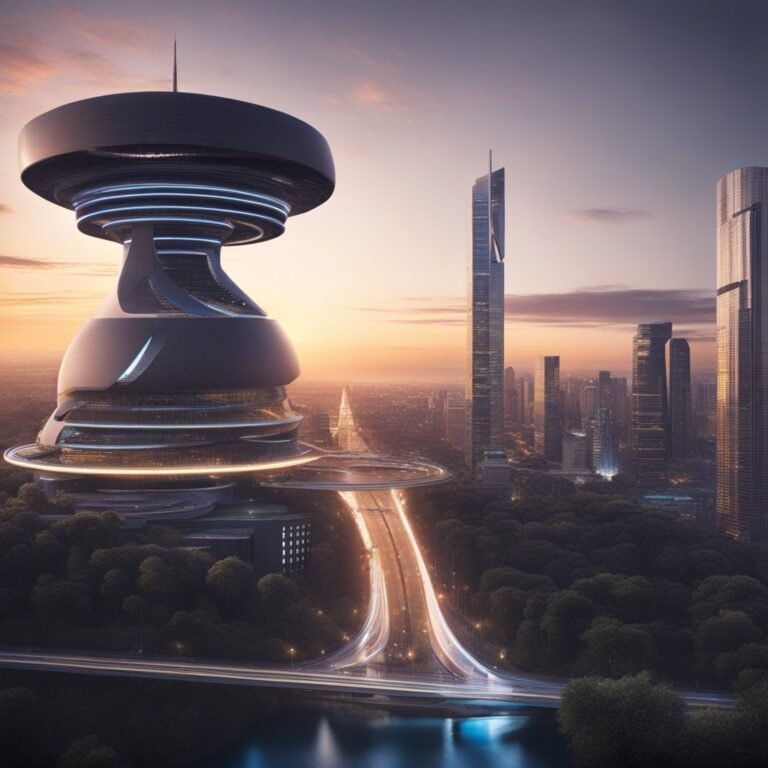
The future of AI is very bright. As AI continues to develop, we can expect to see it used in even more ways to improve our lives.
For example, AI could be used to:
- Develop new medical treatments: AI could be used to develop new drugs and therapies, and to improve the diagnosis and treatment of diseases.
- Create new forms of art and entertainment: AI could be used to create new forms of music, art, and literature.
- Solve some of the world’s most pressing problems: AI could be used to help us to solve problems such as climate change, poverty, and hunger.
Of course, there are also some potential risks associated with AI. For example, AI could be used to develop autonomous weapons systems that could kill without human intervention. Additionally, AI could lead to job displacement as machines become capable of performing many of the tasks that are currently done by humans.
It is important to be aware of these potential risks and to take steps to mitigate them. However, the overall potential of AI is enormous. AI has the potential to make the world a better place for everyone.
Here are some specific examples of how AI could be used in the future:
- AI could help us to develop new energy sources and reduce our reliance on fossil fuels.
- AI could help us to improve food production and reduce hunger.
- AI could help us to develop new cures for diseases and improve healthcare.
- AI could help us to create new forms of transportation and travel.
- AI could help us to explore the universe and learn more about our place in the cosmos.
These are just a few examples of the many ways that AI could be used to improve our lives in the future. The possibilities are endless.
AI is a powerful technology that has the potential to revolutionize