
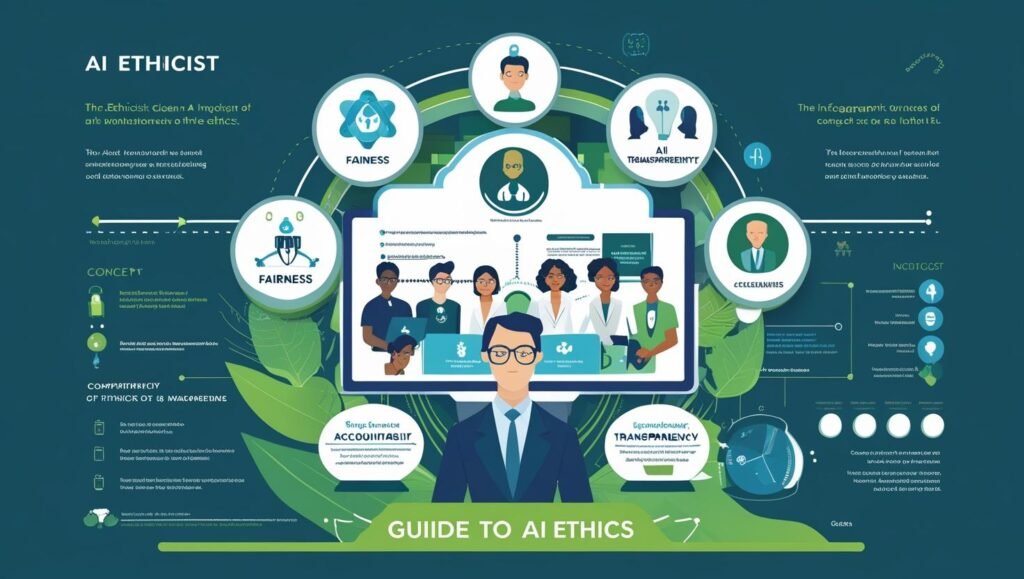
ethicist comprehensive guide —
AI Ethicist: A Comprehensive Guide

As businesses rapidly adopt artificial intelligence for marketing, automation, and analytics, ethical implementation has become a strategic necessity rather than an academic discussion. Organizations must ensure AI systems are transparent, unbiased, and aligned with human values to build long-term trust and regulatory compliance. This is where AI ethics plays a critical role in responsible digital transformation.
The Role of AI Ethics in Digital Transformation
Responsibilities of an AI Ethicist
The responsibilities of an AI ethicist vary depending on the specific organization they work for. However, some common responsibilities include:
- Advising on the ethical development and use of AI. AI ethicists advise organizations on how to develop and use AI in a responsible and ethical manner. They may provide guidance on topics such as bias mitigation, transparency, and accountability.Organizations integrating automation must balance innovation with governance, especially when deploying AI across marketing and analytics environments explained in digital marketing and AI ecosystems.
- Developing ethical guidelines for AI. AI ethicists develop ethical guidelines for the development and use of AI. These guidelines may be internal to the organization or they may be published to the public.
- Educating others about AI ethics. AI ethicists educate others about AI ethics, both within their organization and to the public. They may give talks, write blog posts, and develop educational materials.
Skills Required for an AI Ethicist
AI ethicists need to have a strong foundation in ethics, philosophy, and computer science. They also need to have a good understanding of the potential benefits and risks of AI. In addition to technical skills, AI ethicists also need to have good communication and interpersonal skills.
How to Become an AI Ethicist
There is no one specific path to becoming an AI ethicist. However, some common educational backgrounds for AI ethicists include philosophy, ethics, computer science, and public policy. AI ethicists may also have experience working in the tech industry or in government.
If you are interested in becoming an AI ethicist, there are a few things you can do to prepare:
- Take courses in ethics, philosophy, and computer science. There are many online and in-person courses available that can teach you the basics of ethics, philosophy, and computer science.
- Work on AI ethics projects. The best way to learn about AI ethics is by doing. Try to work on as many AI ethics projects as possible, whether it’s for a personal project, a hackathon, or a job.
- Contribute to open source AI ethics projects. There are many open source AI ethics projects that you can contribute to. This is a great way to learn from other AI ethicists and to gain experience working on large-scale AI ethics projects.
Ethical oversight also improves operational reliability, supporting long-term performance and efficiency optimization across AI-driven systems.
AI Ethicist Career Outlook
The job outlook for AI ethicists is very positive. The demand for AI ethicists is growing rapidly as more and more companies invest in AI. However, it is important to note that AI ethics is a relatively new field, so there are not as many jobs available as in other fields. For this reason, many organizations now work with consulting partners to design accountable AI systems aligned with business strategy through AI implementation and digital transformation services.
Some additional tips for AI ethicists:
- Stay up-to-date on the latest trends and technologies in AI ethics. The field of AI ethics is constantly evolving, so it’s important to stay up-to-date on the latest trends and technologies. This can be done by reading blogs and articles, attending conferences, and taking online courses.
- Build your network. Networking with other AI ethicists is a great way to learn new things, find job opportunities, and collaborate on projects. Attend industry events, connect with people on LinkedIn, and reach out to people you admire.
- Give back to the community. There are many ways to give back to the AI ethics community, such as contributing to open source projects, writing blog posts, and giving talks at meetups and conferences. Giving back is a great way to share your knowledge and help others learn about AI ethics.
AI ethics is a challenging but rewarding career. AI ethicists have the opportunity to work on cutting-edge issues and to help ensure that AI is developed and used in a responsible and ethical manner.
Conclusion
AI ethics is a rapidly growing field with a lot of opportunities for AI ethicists. If you are interested in a career in AI ethics, there are a few things you can do to prepare, such as taking courses in ethics, philosophy, and computer science, working on AI ethics projects, and contributing to open source AI ethics projects.