
Introduction to the Cosmic Joust
📚 Further Reading
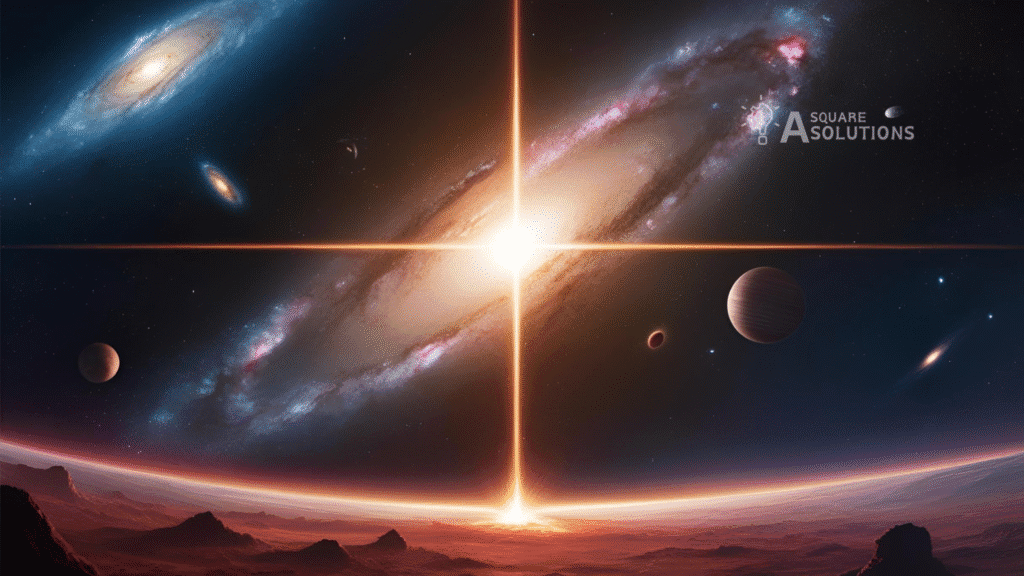
The term “cosmic joust” refers to a significant astronomical event where two galaxies engage in a dramatic collision, an occurrence that has recently been observed by astronomers. This groundbreaking observation provides profound insights into the complexities of galaxy interactions and the evolutionary processes that shape the universe. The collision witnessed across approximately 11 billion years showcases not only the dynamic nature of cosmic bodies but also enhances our understanding of their evolution and structure.
Through advanced telescopic technology and analytical techniques, researchers have been able to uncover the intricacies of this galactic encounter. The dramatic collision delineates a formative chapter in the life cycle of galaxies, wherein gravitational forces lead to the merging of stellar systems, the formation of new stars, and the eventual evolution into more complex galactic structures. Observations indicate that such interactions are not rare; rather, they are integral to the lifecycle of galaxies and contribute significantly to the reformation of galactic material.
The cosmic joust exemplifies a pivotal moment in the continuous dance of galaxies. As these two massive systems interacted, their stellar populations began to collide and coalesce, igniting vigorous star formation in the regions where their gas and dust clouds overlapped. This phenomenon not only enriches the existing knowledge about the star formation rate in colliding galaxies but also sheds light on the dark matter that permeates these structures, influencing their gravitational pull and overall behavior.
Understanding the significance of this cosmic joust alters our perception of galaxy evolution, challenging previously held assumptions about their solitary existence. By studying such galactic collisions, scientists are enhancing their grasp of cosmic history and the evolutionary patterns that govern the universe. This event stands as a testament to the chaotic yet beautiful nature of the cosmos, inviting further exploration into the mysteries of our universe.
The Galactic Duel: Overview of the Collision

In the vast expanse of the universe, a notable confrontation is unfolding between two colossal galaxies. These galaxies, known to astronomers as Galaxy A and Galaxy B, are situated approximately 11 billion light-years away from Earth, positioning them in a time frame that nearly coincides with the early epochs of cosmic evolution. This galactic duel not only captivates scientists but also sheds light on the formation and growth of galaxies in the universe’s infancy.
Galaxy A, a spiral galaxy, is well-recognized for its lush clusters of stars and intense star formation activity, which is driven by gravitational interactions with its counterpart. Galaxy B, on the other hand, exhibits characteristics of an elliptical galaxy, notable for its older stellar population and distinct luminosity. The interaction of these two galaxies is not merely a passive observation; instead, it is marked by significant dynamic forces that influence their respective structures and evolve their stellar populations over time.
At the heart of this galactic encounter lies a powerful quasar, a highly energetic and luminous active galactic nucleus. This quasar emanates from the supermassive black hole located at the center of one of the colliding galaxies, releasing an extraordinary amount of energy as matter accelerates towards it. The presence of the quasar catapults the collision into a prominent cosmic event, drawing interest from astronomers eager to understand how such phenomena shape their host galaxies.
The galaxies are approaching each other at astonishing speeds, estimated to reach several thousand kilometers per second. This high velocity indicates a robust gravitational pull, setting the stage for potential merger dynamics that could reshape them into a new cosmic entity. As the galaxies interact, their gravitational fields disrupt the local interstellar medium, spawning waves of star formation influenced by the quasar’s intense radiation. This collision not only highlights the destructive power of cosmic interactions but also catalyzes the birth of new stellar populations, illustrating the dual nature of such galactic encounters.
Observational Breakthrough: Techniques and Instruments
The exploration of cosmic phenomena necessitates the use of sophisticated observational techniques and cutting-edge instruments. Among the most pivotal of these are the Very Large Telescope (VLT) and the Atacama Large Millimeter/submillimeter Array (ALMA), both of which have played essential roles in studying the merging galaxies in the Cosmic Joust event. The VLT, located in the Atacama Desert, consists of four individual telescopes that can operate independently or in unison. This flexibility enables astronomers to capture high-resolution images across multiple wavelengths, paving the way for detailed observations of celestial bodies.
The VLT’s advanced adaptive optics system significantly mitigates the effects of atmospheric turbulence, allowing for clearer and more precise investigations of distant galaxies. This capability is crucial when distinguishing between the various elements involved in galaxy mergers, such as stellar clusters and interstellar gas clouds. Furthermore, the VLT excels in spectroscopic analysis, which is instrumental in providing insights into the composition, temperature, and movement of these galaxies, thereby facilitating a deeper understanding of their evolution.
In addition to the VLT, ALMA offers a complementary suite of observational capabilities that focus on millimeter and submillimeter wavelengths. The array consists of 66 high-precision antennas located at a high-altitude site in Chile, enabling it to observe the cold gas and dust clouds that are often involved in the formation and merging of galaxies. ALMA’s unique ability to capture the light emitted by quasars, which are bright and distant objects resulting from active black holes, has been invaluable in unraveling the intricate dynamics of the Cosmic Joust event. Together, these instruments exemplify the advancements in astronomical technology, revealing the complexities of cosmic events over billions of years and enhancing our comprehension of the universe’s vast narrative.
The Impact of Quasar Radiation
🚀 Need expertise in AI-Powered Analytics?
A Square Solutions delivers measurable results — from strategy to deployment.
🚀 A Square Solutions
We specialise in AI-Powered Research & Analytics — helping businesses scale through AI and intelligent digital systems.
Frequently Asked Questions
What is Introduction to the Cosmic Joust?
The term “cosmic joust” refers to a significant astronomical event where two galaxies engage in a dramatic collision, an occurrence that has recently been observed by astronomers.
What is The Galactic Duel?
In the vast expanse of the universe, a notable confrontation is unfolding between two colossal galaxies.
What is Observational Breakthrough?
The exploration of cosmic phenomena necessitates the use of sophisticated observational techniques and cutting-edge instruments.
What is The Impact of Quasar Radiation?
2026 Strategic Resources: How Ai Is Being Used By The Government To Improve Public Services Top 5 Digital Marketing Companies In France Leading The Charge In Innovative Strategies Linkedin Suspends Ai Training Using Uk U.
Sources: NASA Official | European Space Agency
💬 Questions about this topic?
Use the 🤖 Ask Our AI widget (bottom-right) — instant answers, 24/7.