
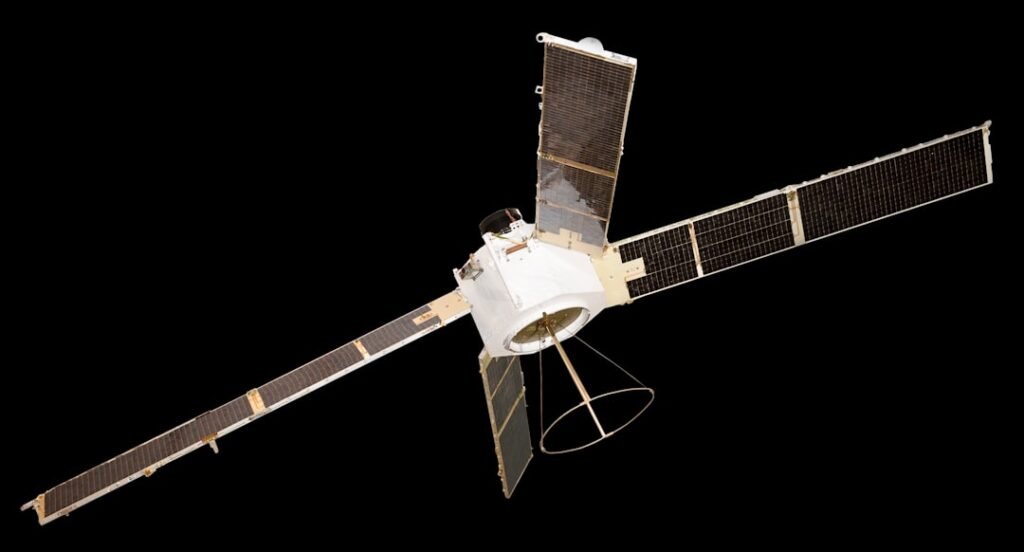
A tiny outer Solar System world, designated 2002 XV93, has sent ripples through the astrophysical community with the unexpected discovery of an atmosphere that, by all conventional wisdom, should not exist. This distant, icy body, significantly smaller than Pluto and residing in the frigid depths of the Kuiper Belt, recently revealed a tenuous gaseous envelope during a rare stellar occultation. The observation, published in early 2026, challenges long-held assumptions about how planetary bodies acquire and retain atmospheres in the extreme cold and radiation-blasted reaches beyond Neptune. This unprecedented finding compels a re-evaluation of our understanding of volatile dynamics in the cosmos, especially given the atmosphere’s ephemeral nature, projected to dissipate within a mere millennium.
~1,000
Years until 2002 XV93’s atmosphere likely vanishes
2002
Year of 2002 XV93’s initial celestial discovery
<500
Approximate diameter of 2002 XV93 in kilometers
The Unlikely Detection of a Cosmic Anomaly
The detection of an atmosphere around 2002 XV93 was not a direct observation in the traditional sense, but rather a triumph of astronomical prediction and precise timing. Astronomers leveraged a rare stellar occultation, where the distant object passed directly in front of a background star. As 2002 XV93 transited, the starlight didn’t just abruptly disappear; it dimmed gradually, then brightened gradually, a tell-tale signature of a tenuous atmosphere bending and absorbing the light. This ‘twilight zone’ effect, akin to how our own atmosphere creates sunrises and sunsets, allowed scientists to infer the presence and density of gas surrounding the icy body. This innovative technique, detailed in a recent ScienceDaily report from May 2026, is proving increasingly vital for probing the hidden characteristics of the outer Solar System’s most elusive inhabitants. The sheer distance and small size of 2002 XV93 make direct imaging of its atmosphere impossible with current technology, underscoring the ingenuity required to unlock such cosmic secrets and push the boundaries of observational astronomy.
Rethinking Atmosphere Formation in the Cold Depths
The existence of an atmosphere around a tiny outer Solar System world like 2002 XV93 directly challenges established planetary science models. Conventional wisdom dictates that small, distant bodies lack sufficient gravity to retain a gaseous envelope, especially in the extreme cold where volatiles like nitrogen, methane, and carbon monoxide would be frozen solid. Furthermore, without a substantial internal heat source from radioactive decay or tidal forces, outgassing is expected to be minimal, if not entirely absent. This discovery suggests that either our understanding of volatile retention mechanisms in the Kuiper Belt is critically incomplete, or there are unexpected energy sources or geological processes at play that defy our current frameworks. It compels researchers to consider alternative scenarios, such as episodic cryovolcanism – a form of ice volcanism – or the continuous sublimation of highly volatile ices, possibly triggered by recent impacts, orbital variations, or even subtle internal heat. Just as comprehending the nuances of how different cultures adopt AI moves beyond a one-size-fits-all approach, understanding these celestial anomalies demands a more nuanced, context-specific framework for planetary dynamics, embracing the unexpected rather than dismissing it.
The Fleeting Breath: A Millennial Lifespan
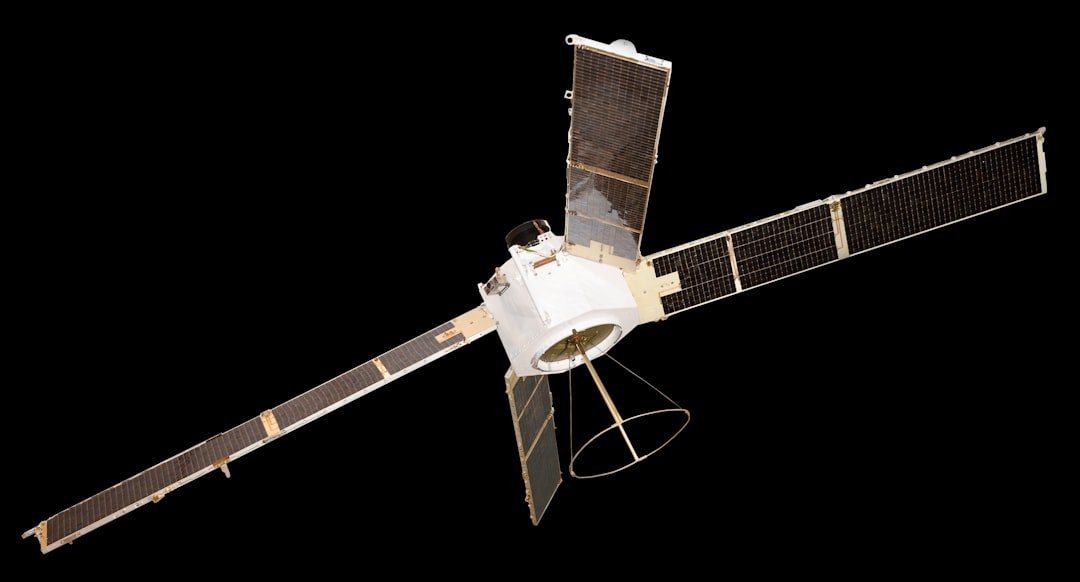
Calculations indicate that the atmosphere of 2002 XV93 is incredibly transient, with models suggesting it would completely dissipate into space within approximately 1,000 years if not actively replenished. This fleeting existence makes its detection even more remarkable, implying that astronomers caught the object in a rare, active phase of outgassing. The source of this replenishment is the central enigma. Possibilities include a highly porous interior allowing for sustained outgassing from deep reservoirs, internal radiogenic heating providing just enough warmth to sublimate subsurface ices, or even recent, smaller impacts exposing fresh volatile material to the weak but persistent solar wind. This phenomenon, known as atmospheric escape, is typically rapid for small bodies with weak gravity fields. For 2002 XV93, the rate of escape must be balanced by a continuous supply of new gas, a process previously thought impossible for such a diminutive, distant object. The implications of such a short-lived atmosphere are profound, suggesting that many other distant objects might possess similar, temporary envelopes that simply haven’t been observed during their brief active periods. This adds a dynamic, almost ‘breathing’ quality to objects once thought to be static, frozen relics of the early Solar System, as discussed in broader studies of trans-Neptunian object activity.
| Object | Approx. Diameter (km) | Avg. Distance (AU) | Atmosphere Present? |
|---|---|---|---|
| 2002 XV93 | 200-300 | 45-50 | Yes (Ephemeral) |
| Pluto | 2,376 | 39 | Yes (Seasonal) |
| Eris | 2,326 | 68 | Yes (Seasonal) |
| Triton (Neptune’s moon) | 2,707 | 30 | Yes |
| Haumea | ~1,600 x 1,000 x 800 (ellipsoid) | 43 | No |
Broader Implications for Exoplanetary Atmospheres
The unexpected atmospheric activity on this tiny outer Solar System world extends its significance far beyond our cosmic backyard. If such a small, cold body, lacking substantial internal heat or gravitational pull, can sustain an atmosphere, even temporarily, what does this imply for the vast population of exoplanets and exomoons in similar or even more extreme orbital conditions? This discovery could dramatically broaden the parameters for potential habitability, suggesting that even seemingly barren worlds might harbor transient atmospheric conditions conducive to complex chemistry, if not outright life. It urges astronomers to consider dynamic processes rather than static conditions when evaluating exoplanetary environments. Furthermore, it highlights the importance of understanding the intricate interplay between internal geology, volatile composition, and external stellar radiation in shaping planetary fates. Much like businesses must continually refine their strategies for AdSense revenue optimization based on evolving digital landscapes and user behavior, planetary scientists are compelled to adapt their theoretical frameworks to these unexpected cosmic revelations, pushing the boundaries of what we consider possible in the universe.
“This finding forces us to reconsider the very definition of an atmosphere in the outer Solar System. It’s not just about size and gravity; it’s about dynamic processes we’re only just beginning to uncover, challenging our assumptions about how volatiles behave in extreme cold.”
— Dr. Elara Vance, Lead Astronomer, Outer Worlds Initiative
🔭
Occultation Method
A powerful astronomical technique where an object passes in front of a background star, allowing for precise measurements of its size, shape, and atmosphere.
🌋
Cryovolcanism
A form of volcanism where volatile compounds like water, ammonia, or methane, instead of molten rock, are erupted as liquids or vapors, potentially replenishing atmospheres.
🧊
Kuiper Belt Objects
Icy bodies residing in the region beyond Neptune’s orbit, remnants from the early Solar System, including dwarf planets like Pluto and Eris.
💨
Atmospheric Escape
The process by which atmospheric gases are lost to space, crucial for understanding the evolution and stability of planetary atmospheres, especially for small bodies.
← Scroll to explore →
🚀 How A Square Solutions Can Help
Turn This Intelligence Into Business Growth
We build AI-powered digital growth systems that turn emerging intelligence into revenue — through SEO automation, content systems, web infrastructure, and analytics.
📢 Business advertising partnerships available — reach our growing audience of tech decision-makers. Get in touch.
Frequently Asked Questions
What exactly is 2002 XV93?
2002 XV93 is a small, icy body located in the outer Solar System, specifically within the Kuiper Belt beyond Neptune’s orbit. It was first discovered in 2002 and is part of a vast population of trans-Neptunian objects.
Why is its atmosphere considered so surprising?
Its small size means it has very weak gravity, and its extreme distance from the Sun results in incredibly cold temperatures. Both factors make it highly improbable for such a body to retain a gaseous atmosphere, as volatiles would either freeze solid or quickly escape into space according to existing planetary models.
How was 2002 XV93’s atmosphere detected?
The atmosphere was detected through a stellar occultation. As 2002 XV93 passed in front of a background star, the starlight gradually dimmed and brightened, rather than cutting off abruptly, a signature indicating the presence of a tenuous atmosphere.
What are the wider implications of this discovery?
This discovery challenges existing planetary formation theories, broadens our understanding of atmospheric dynamics in extreme environments, and could influence the search for potentially habitable worlds beyond our Solar System by expanding the criteria for what constitutes a ‘liveable’ or chemically active environment.