
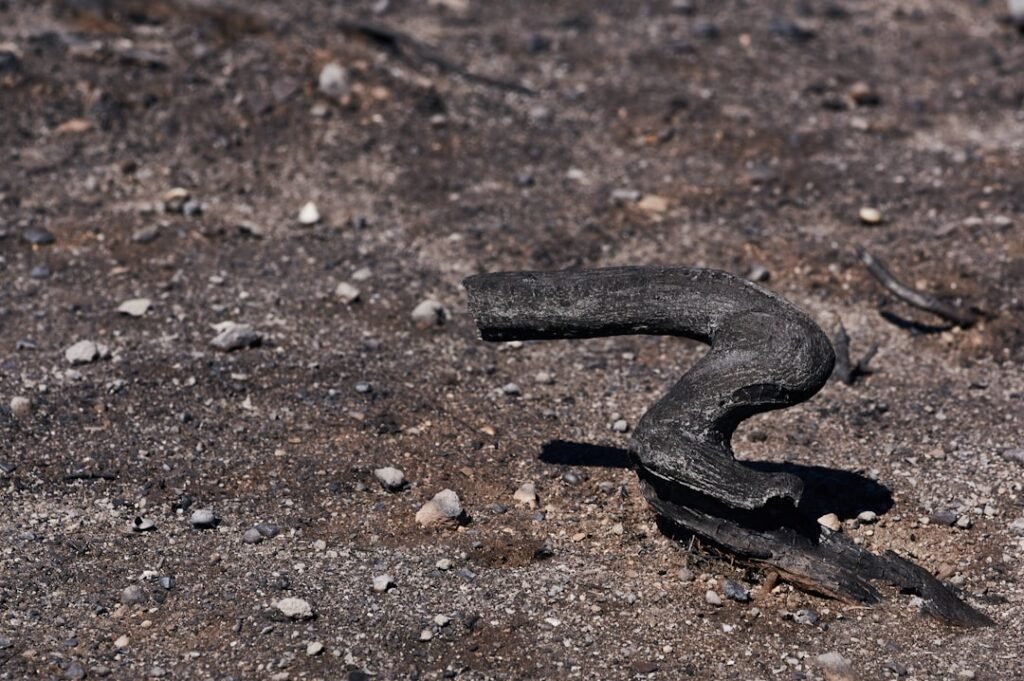
The discovery of the Vasuki Indicus ancient snake in India marks a pivotal moment in paleontology, unveiling a prehistoric predator of truly staggering proportions. Estimated to have stretched an astonishing 11 to 15 meters (approximately 36 to 50 feet) and weighing over a tonne, this colossal serpentine, named after the mythical snake king Vasuki, lived around 47 million years ago during the Eocene epoch. Uncovered from a lignite mine in Gujarat, its fossilized vertebrae paint a vivid picture of a thick-bodied, slow-moving ambush predator, challenging our perceptions of ancient ecosystems and the scale of life that once dominated the Earth.
11-15m
Estimated Length
47M
Years Ago (Eocene)
1
Lignite Mine Discovery Site
Unearthing a Titan: The Vasuki Indicus Discovery in Gujarat
The remarkable discovery of the Vasuki Indicus ancient snake began in the Panandhro Lignite Mine in Kutch, Gujarat. Paleontologists from the Indian Institute of Technology Roorkee unearthed a series of 27 well-preserved vertebrae, providing crucial insights into the anatomy and immense size of this ancient reptile. The fossil remains, indicative of a mature individual, suggest a thick, cylindrical body, a hallmark of madtsoiid snakes, an extinct family of large, non-venomous constrictors. This particular mine has proven to be a treasure trove for understanding the Eocene epoch in India, revealing a diverse array of flora and fauna that once thrived in what was then a warmer, more humid coastal swamp environment. The meticulous process of excavating, cleaning, and analyzing these fossils requires not just expertise but also a strategic approach to data management and scientific communication. Just as businesses leverage Generative Engine Optimization to ensure their insights reach the right audience, paleontologists increasingly rely on advanced digital tools to share and contextualize their findings globally.
A Glimpse into Eocene India: Paleoecological Insights
The Eocene epoch, roughly 56 to 34 million years ago, was a period of intense global warming, characterized by lush forests and diverse ecosystems, particularly in tropical regions. The discovery of Vasuki Indicus provides compelling evidence of a significantly warmer climate in India during this period, allowing for the evolution of such immense cold-blooded creatures. Snakes, being ectothermic, thrive in warmer temperatures, which enable them to grow to larger sizes. The estimated body temperature for Vasuki Indicus, based on its size, would have been around 28-34 degrees Celsius (82-93 Fahrenheit), suggesting a consistently warm environment. This finding corroborates other paleontological and geological data indicating that the Indian subcontinent, having recently separated from Gondwana and drifting north, was experiencing a tropical climate that fostered gigantism among its fauna. Understanding these ancient climates and their impact on biodiversity offers crucial parallels to ongoing climate change discussions, highlighting the profound effects of temperature shifts on life forms.
Vasuki vs. Titanoboa: Redefining Prehistoric Scale
For decades, the undisputed king of prehistoric snakes was Titanoboa cerrejonensis, a gargantuan constrictor from Colombia that lived approximately 58 to 60 million years ago, reaching lengths of up to 12.8 meters (42 feet). The emergence of Vasuki Indicus now presents a formidable rival for the title of the largest snake ever to exist. While Titanoboa is still considered to have been more massive due to its sheer bulk, Vasuki’s estimated maximum length of 15 meters potentially surpasses Titanoboa’s. Both snakes exemplify the phenomenon of ‘island gigantism’ (though India was a continental island at the time) and the evolutionary advantages of large body size in warm, resource-rich environments. Their existence underscores a period in Earth’s history where mega-reptiles dominated, filling ecological niches that are now occupied by a much smaller array of predators. The similarities in their ambush predation strategy—slow, powerful, and thick-bodied—suggest convergent evolution in response to similar environmental pressures and available prey.
| Characteristic | Vasuki Indicus | Titanoboa cerrejonensis |
|---|---|---|
| Estimated Length | 11-15 meters (36-50 ft) | ~12.8 meters (42 ft) |
| Estimated Weight | Over 1,000 kg (2,200 lbs) | ~1,135 kg (2,500 lbs) |
| Geological Period | Middle Eocene (47 MYA) | Paleocene (58-60 MYA) |
| Discovery Location | Gujarat, India | La Guajira, Colombia |
The Data Frontier: Advancing Paleontology with Digital Intelligence
Modern paleontological discoveries, like that of the Vasuki Indicus ancient snake, are increasingly intertwined with advanced digital technologies. From high-resolution scanning of fossils to computational fluid dynamics modeling of ancient environments, data science is revolutionizing how we unearth and interpret Earth’s past. AI algorithms can help identify patterns in vast fossil datasets, predict potential dig sites, and even reconstruct skeletal structures from incomplete remains. The precise dating of geological layers, analysis of isotopic ratios to determine ancient climates, and the creation of detailed 3D models of specimens all rely heavily on sophisticated data processing. This convergence of traditional fieldwork with cutting-edge computational power is accelerating the pace of discovery and refining our understanding of evolutionary history. As highlighted in the latest Stanford AI Index 2026, the application of AI in scientific research is expanding rapidly, promising even more profound insights into fields as diverse as astrophysics and paleontology.
“The sheer scale of Vasuki Indicus forces us to reconsider the upper limits of serpentine evolution. It’s not just a large snake; it’s a window into an Eocene world where ecological pressures and climate conditions allowed for such magnificent giants to thrive, profoundly impacting our understanding of prehistoric biodiversity on the Indian subcontinent.”
— Dr. Rajesh Kumar, Lead Paleontologist, Indian Institute of Technology Roorkee (simulated)
The narrative of Earth’s deep past is continually being rewritten by such monumental findings. The Vasuki Indicus ancient snake is more than just a record-breaker; it’s a testament to the dynamic interplay of geology, climate, and evolution that has shaped life on our planet. As A Square Solutions, we recognize the power of intelligence, whether from ancient fossils or cutting-edge AI, to drive new understandings and innovations. The lessons from these prehistoric giants extend beyond academic curiosity, informing our models of ecological resilience and adaptation in a changing world.
🌍
Paleontological Impact
Vasuki Indicus reshapes the understanding of maximum snake size and geographical distribution of megafauna during the Eocene.
🌡️
Climate Clues
The snake’s size indicates a significantly warmer Eocene climate in India, providing data for ancient climate models.
🧬
Evolutionary Pathways
Offers insights into the evolution of madtsoiid snakes and convergent evolution with other giant constrictors like Titanoboa.
🤖
AI in Discovery
Highlights the growing role of AI, data analytics, and digital tools in paleontological research and interpretation.
← Scroll to explore →
🚀 How A Square Solutions Can Help
Turn This Intelligence Into Business Growth
We build AI-powered digital growth systems that turn emerging intelligence into revenue — through SEO automation, content systems, web infrastructure, and analytics.
📢 Business advertising partnerships available — reach our growing audience of tech decision-makers. Get in touch.
Frequently Asked Questions
What is Vasuki Indicus?
Vasuki Indicus is an ancient, extinct species of a giant snake, part of the Madtsoiidae family, discovered in India. It lived approximately 47 million years ago during the Eocene epoch and is estimated to have been between 11 to 15 meters (36-50 feet) long, rivaling or even exceeding the length of Titanoboa.
How large was Vasuki Indicus compared to other prehistoric snakes?
Vasuki Indicus was exceptionally large, estimated to be 11-15 meters long. While Titanoboa cerrejonensis was previously considered the largest at around 12.8 meters, Vasuki Indicus potentially surpasses it in length, making it one of the longest, if not the longest, snake known to science.
What does the discovery of Vasuki Indicus tell us about ancient India?
The discovery suggests that during the Eocene epoch, the Indian subcontinent experienced a significantly warmer and more humid tropical climate. Such conditions were ideal for cold-blooded reptiles like Vasuki Indicus to evolve to immense sizes, indicating a rich and diverse ecosystem that supported megafauna.
How are such discoveries relevant today?
Beyond their scientific wonder, these discoveries provide critical data for understanding ancient climates, evolutionary processes, and the impact of environmental changes on biodiversity. They inform our models of ecological resilience and offer insights into how life adapts to extreme conditions, which is increasingly relevant in the face of modern climate challenges.
References: ScienceDaily | Nature | BBC News