
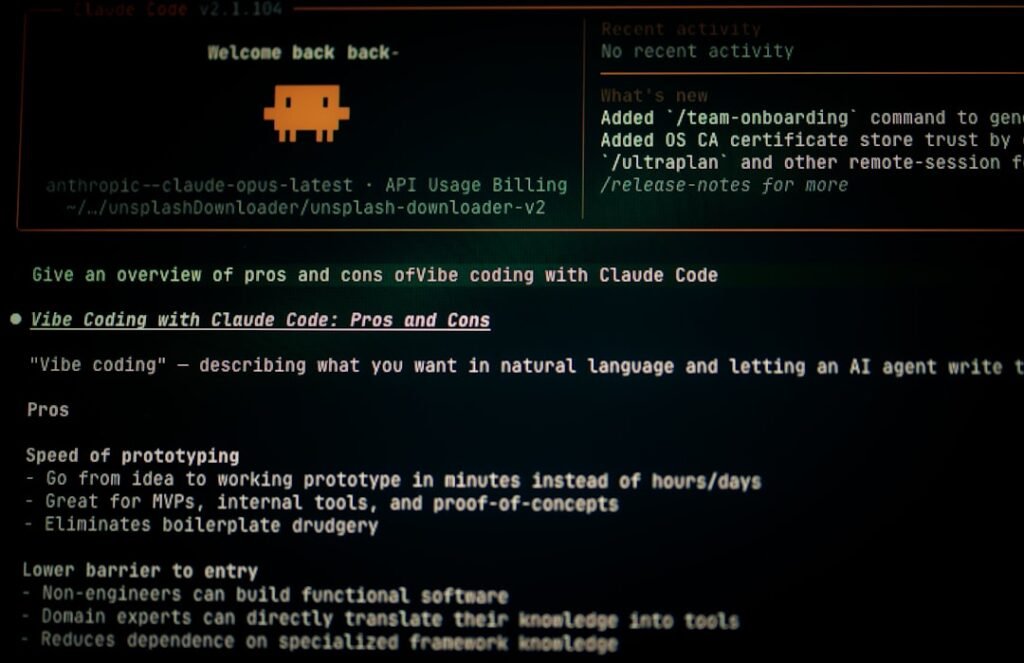
The landscape of software development is undergoing a profound transformation, driven by the emergence of sophisticated AI agents. At the heart of this shift is the burgeoning trend of Open Source AI Coding, which is rapidly democratizing access to advanced programming tools. While proprietary solutions like Anthropic’s Claude Code captivate developers with their autonomous capabilities, their substantial monthly costs—ranging from $20 to an eye-watering $200—are sparking a quiet rebellion. This economic friction point creates fertile ground for open-source alternatives, exemplified by Block’s Goose, which offers comparable functionality for free, executed entirely on local machines, signaling a pivotal moment for the industry. We document how we use Claude Code in production environments — including which settings matter and which edge cases to watch for — in the Claude Code operator track at AI Execution Lab.
$200
Max monthly cost for Claude Code
$0
Monthly cost for Goose
100%
Potential savings on AI coding agents
The Cost Conundrum of AI Coding Agents
The allure of AI coding agents is undeniable. Tools like Anthropic’s Claude Code promise to revolutionize developer workflows, offering autonomous capabilities to write, debug, and deploy code. Imagine an AI that acts as a tireless co-pilot, handling repetitive tasks, catching errors before they escalate, and even spinning up new functionalities with minimal human intervention. This vision has naturally captivated software developers globally, eager to harness such power to accelerate innovation and reduce development cycles. However, the enthusiasm often collides with the practical realities of subscription models.
Claude Code’s pricing structure, ranging from $20 to $200 per month, depending on usage, has become a significant point of contention. For individual developers or small startups operating on tight budgets, these costs can quickly become prohibitive. While large enterprises might absorb such expenses as part of their operational overhead, the grassroots developer community—often the earliest adopters and evangelists of new technologies—finds itself at a crossroads. The promise of democratized AI-powered development clashes with an economic model that appears to gate access behind a paywall. This friction is not merely about cost; it’s about the fundamental philosophy of technological access and the potential for a two-tiered system where advanced tools are only available to those with deeper pockets. The implications for innovation are profound, potentially stifling the very creativity AI is meant to unlock for the broader developer ecosystem.
Open Source AI Coding: Goose and the Rise of Local-First AI
In stark contrast to the proprietary model, the emergence of initiatives like Goose represents a powerful counter-movement in Open Source AI Coding. Developed by Block, Goose offers nearly identical functionality to high-cost alternatives but with a crucial difference: it runs entirely on a user’s local machine. This paradigm shift—from cloud-dependent, subscription-based services to local, free, and open-source solutions—is a game-changer. The immediate benefit is obvious: zero subscription fees, eliminating the financial barrier to entry for developers worldwide. This significantly broadens the accessibility of advanced AI coding agents, allowing individual programmers, students, and small teams to experiment, learn, and build without incurring recurring costs.
Beyond cost, local execution brings a host of other advantages. Privacy and data sovereignty become paramount, as code and sensitive project information never leave the user’s control or traverse external servers. This is particularly appealing in environments with strict data governance requirements or for developers working on proprietary projects. Furthermore, local execution often translates to lower latency and the ability to work offline, fostering uninterrupted productivity. The open-source nature of Goose also means transparency, auditability, and the potential for community-driven enhancements. Developers are not just users; they become contributors, able to inspect the code, customize it to their specific needs, and collectively improve the agent’s capabilities. This collaborative model harnesses the collective intelligence of the developer community, accelerating innovation in ways proprietary systems struggle to match.
Strategic Implications for AI Development and Business
The rise of free, local-first AI coding agents like Goose carries significant strategic implications for both the broader AI development landscape and individual businesses. For one, it intensifies competition within the AI tooling market. Proprietary providers, once confident in their subscription-based revenue models, now face pressure to innovate beyond pure functionality, perhaps by offering specialized features, superior integration, or enhanced support to justify their costs. This competitive pressure is ultimately beneficial for developers, driving down prices and fostering a race to deliver more value.
Furthermore, the shift towards open-source and local execution influences talent acquisition and retention. Developers, especially those early in their careers or based in regions with limited purchasing power, will naturally gravitate towards tools that are accessible and empower them without financial burden. This democratizes access to advanced AI skills, potentially broadening the global talent pool for companies willing to embrace diverse tooling. Businesses, in turn, can leverage these free tools to prototype ideas, train their workforce, and reduce software licensing costs, redirecting resources towards core innovation. This divergence also highlights cultural differences in AI adoption, where economic factors and data sovereignty play significant roles in how quickly and widely certain AI tools are embraced across different regions and industries.
Beyond Cost: Performance, Customization, and Community
While cost is a primary driver, the advantages of open-source, local-first AI coding agents extend far beyond mere financial savings. Performance is a critical factor. By running locally, Goose can potentially offer lower latency and faster response times compared to cloud-based services, especially when network conditions are suboptimal or when dealing with large codebases. This can significantly improve the developer experience, leading to more fluid and uninterrupted workflows. The ability to execute AI models directly on powerful developer workstations, often equipped with high-end GPUs, can match or even exceed the processing power available through shared cloud instances, particularly for bursty, on-demand tasks.
Customization is another powerful differentiator. Proprietary AI agents typically offer limited configuration options, operating as black boxes with fixed functionalities. Open-source alternatives, by their very nature, invite modification. Developers can fine-tune models, integrate custom libraries, build specialized plugins, or even fork the project to create highly tailored versions that perfectly fit their unique development environments and project requirements. This level of control fosters deeper integration into existing toolchains and enables innovation that would be impossible with closed systems. The community aspect is equally vital; a vibrant open-source community around a project like Goose means continuous improvement, rapid bug fixes, and a wealth of shared knowledge and resources. This collaborative ecosystem mirrors the scientific community’s approach to discovery, much like the recent excitement around JWST biosignature discovery on TOI-270d, where shared data and open collaboration accelerate breakthroughs.
Navigating the Future of Developer Tooling
The emergence of Goose and the broader trend towards local-first, open-source AI coding agents signals a maturing phase in the AI tooling market. It forces a re-evaluation of value propositions. While proprietary solutions may continue to thrive by offering unparalleled ease of use, managed services, or highly specialized models trained on vast, unique datasets, the open-source movement will increasingly cater to developers who prioritize cost control, privacy, and customization. We may see a future where hybrid models become common, combining the flexibility of local execution with the scalable compute power of the cloud for specific, resource-intensive tasks.
For businesses, the strategic imperative is clear: understand the evolving landscape and adopt a flexible tooling strategy. Relying solely on expensive proprietary solutions without considering robust open-source alternatives could lead to inflated operational costs and missed opportunities for innovation. Conversely, embracing open-source can empower development teams, foster a culture of experimentation, and potentially unlock new efficiencies. The decision will increasingly hinge on specific project requirements, team expertise, data sensitivity, and long-term strategic goals, rather than simply accepting the status quo of cloud-centric AI services.
| Feature | Claude Code (Proprietary) | Goose (Open Source) |
|---|---|---|
| Cost per Month | $20 – $200 (usage-dependent) | Free |
| Execution Environment | Cloud-based | Local machine |
| Cloud Dependency | High | None |
| Customization | Limited | Extensive (open-source) |
“The shift towards local-first, open-source AI is not just about cost savings; it’s a fundamental reassertion of developer control over their tools and data. This movement will inevitably push proprietary vendors to innovate beyond mere access, focusing on unique value propositions that justify their premium.”
— Dr. Anjali Sharma, Head of AI Research, A Square Solutions
💰
Cost Efficiency
Open-source AI agents eliminate subscription fees, offering significant financial relief for individual developers and startups.
🖥️
Local Execution
Running AI on local machines ensures data privacy, reduces latency, and enables offline functionality for developers.
⚙️
Open Source Advantage
Transparency, auditability, and the freedom to customize and integrate agents into existing workflows are key benefits.
🤝
Community Driven
A vibrant community ensures continuous improvement, rapid bug fixes, and a rich ecosystem of shared knowledge and contributions.
← Scroll to explore →
🚀 How A Square Solutions Can Help
Turn Intelligence Into Business Advantage
We build AI-powered digital growth systems that help businesses in India and globally translate emerging intelligence into revenue — through SEO automation, content systems, web infrastructure, and data analytics.
📢 Also accepting business advertising partnerships — if you want your brand in front of our growing audience of tech decision-makers, get in touch.
Frequently Asked Questions
What is an AI coding agent?
An AI coding agent is an artificial intelligence program designed to assist or autonomously perform tasks related to software development, such as writing, debugging, testing, and deploying code. They leverage large language models to understand programming contexts and generate appropriate code.
How does Goose offer its services for free?
Goose is an open-source AI agent developed by Block. Its ‘free’ nature stems from its open-source license, allowing anyone to use, modify, and distribute the software without subscription fees. It operates by running locally on a user’s machine, eliminating the need for costly cloud infrastructure that proprietary services depend on.
What are the benefits of local AI execution?
Local AI execution offers several key benefits, including enhanced data privacy and security (as data never leaves your machine), reduced latency for faster responses, the ability to work offline, and full control over the AI’s environment and customization without cloud dependencies or recurring costs.
Will proprietary AI coding agents disappear?
It’s unlikely proprietary AI coding agents will disappear entirely. They may continue to cater to specific market segments by offering unique features, managed services, dedicated support, or highly specialized models. However, the rise of open-source alternatives like Goose will undoubtedly pressure them to justify their pricing with superior value propositions, leading to a more competitive and diverse market.