
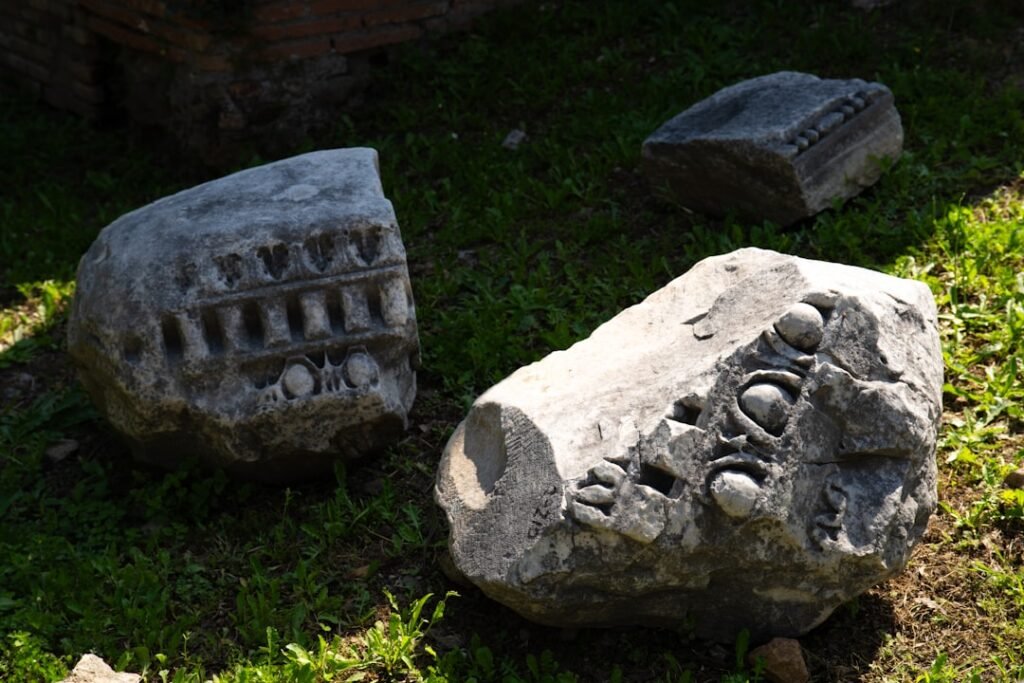
The discovery of a newly confirmed mass grave in ancient Jordan offers unprecedented, chilling data points on ancient pandemic societal collapse. Dating back 1,500 years, this site provides a stark archaeological record of the Plague of Justinian, a cataclysmic event that decimated populations and reshaped the geopolitical landscape of its era. This finding is more than a historical footnote; it’s a profound reminder that pandemics are not merely biological events but catalysts for fundamental societal transformation, compelling us to examine the vulnerabilities and adaptive capacities embedded within human civilization, past and present.
1,500
Years ago, the Plague of Justinian struck
Hundreds
Of victims buried in the mass grave
Days
Required for mass burials, indicating rapid death toll
Unearthing the Past: The Justinian Plague’s Grim Footprint
The archaeological discovery in Jordan provides a rare, tangible link to the immediate, overwhelming impact of the Plague of Justinian. Unlike historical texts, which can be prone to exaggeration or selective memory, a mass grave offers irrefutable evidence of a sudden, immense mortality event. The sheer number of bodies, interred within days, speaks volumes about the speed and lethality of the pathogen. This wasn’t a gradual decline but a swift, brutal decimation that left little time for traditional burial rites, forcing communities to adapt to an unprecedented scale of death.
Researchers note that the individuals buried were not from a single, confined settlement but represented a population that typically lived spread out across various regions. This indicates that the plague’s reach extended beyond urban centers, illustrating a wide-ranging devastation that could overcome geographical dispersion. The discovery challenges assumptions about ancient disease containment and underscores the vulnerability of even decentralized populations to highly virulent pathogens. Understanding how societies, from ancient empires to modern corporations, react to such existential threats provides critical context for strategic planning. Just as an emergent market player like BYD leverages its BYD electric vehicle growth strategy to achieve global dominance in a dynamic environment, ancient societies too had to devise rapid, often grim, strategies to cope with overwhelming crises.
The forensic analysis of these remains, coupled with genetic studies, promises to unlock deeper insights into the specific strain of Yersinia pestis responsible and its evolutionary trajectory. Such data is invaluable for understanding the pathogen’s historical epidemiology and could inform contemporary research into infectious disease dynamics. It’s a testament to the power of interdisciplinary research, merging archaeology, history, and modern science to reconstruct the past with unprecedented fidelity.
When Societies Collapse: A 1,500-Year-Old Warning
The Plague of Justinian, occurring from 541 to 750 AD, is estimated to have killed between 30 to 50 million people, possibly up to 100 million, making it one of the deadliest pandemics in human history. Its impact went far beyond mere mortality statistics. It precipitated economic decline, social upheaval, and political instability across the Byzantine Empire and beyond. Agricultural output plummeted as labor forces vanished, trade routes were disrupted, and the fabric of community life was irrevocably altered. Cities, once vibrant hubs of commerce and culture, became ghost towns or struggled to rebuild their populations and infrastructure.
The mass grave serves as a microcosm of this larger societal disintegration. The concentration of death, the lack of individual recognition in burial, and the sheer scale of the event reflect a society pushed to its absolute limits. It highlights how quickly established norms and social structures can erode under extreme pressure. The psychological toll on survivors, who witnessed such widespread death and the collapse of familiar systems, would have been immense, affecting subsequent generations and shaping cultural memory for centuries.
This historical precedent offers a chilling template for understanding the potential consequences of global health crises. While modern medicine and infrastructure provide layers of defense unknown to the ancients, the underlying vulnerabilities of interconnected societies remain. Supply chain fragility, economic interdependence, and the psychological impact of prolonged uncertainty are all echoes of challenges faced by societies during the Justinian Plague. The past, in this instance, is not just a story but a dataset for risk assessment.
Data from Dust: Informing Modern Pandemic Preparedness
The profound implications of this ancient pandemic societal collapse extend directly to contemporary strategies for pandemic preparedness. By meticulously studying the archaeological record, we gain empirical data on how quickly a society can be overwhelmed, the spatial distribution of mortality, and the immediate logistical challenges of mass death. This granular data complements historical accounts, offering a more complete picture of the multi-faceted crisis. For instance, understanding that even dispersed populations were affected suggests the need for comprehensive, region-wide response plans, not just targeted interventions in urban centers.
Modern societies, with their advanced epidemiological models and global surveillance networks, still grapple with the speed and scale of new pathogens. The lessons from the Justinian Plague emphasize the importance of rapid diagnostic capabilities, efficient communication infrastructure, and robust public health systems that can scale up dramatically under pressure. Furthermore, the societal transformations observed—demographic shifts, economic restructuring, and changes in governance—highlight the need for long-term recovery plans that anticipate and mitigate broad systemic impacts, not just immediate health crises.
In an era defined by digital intelligence, the ability to collect, analyze, and disseminate information rapidly is paramount. Tools like a free QR code generator, while seemingly simple, represent a paradigm shift in how information can be shared quickly and efficiently, whether for contact tracing, public health advisories, or even managing logistics during a crisis. The contrast between the slow, localized information flow of 1,500 years ago and today’s instant global communication is stark, yet the fundamental need for clear, actionable data remains constant. Leveraging AI and data analytics to predict outbreaks, manage resources, and combat misinformation is the modern equivalent of understanding the wind patterns that carried ancient plagues.
| Characteristic | Plague of Justinian (6th-8th Century AD) | Modern Pandemic (e.g., COVID-19 Era) |
|---|---|---|
| Pathogen | Yersinia pestis (Bubonic Plague) | SARS-CoV-2 (Respiratory Virus) |
| Speed of Spread | Relatively slow (by human/animal vectors), but devastating locally | Extremely rapid (air travel, dense populations) |
| Information Flow | Slow, localized, oral tradition, limited written records | Instantaneous, global, digital networks (news, social media) |
| Medical Response | Limited understanding, rudimentary treatments, spiritual focus | Advanced diagnostics, vaccines, antivirals, critical care |
The Echoes of Epidemics: Resilience and Transformation
Beyond the immediate devastation, the long-term societal effects of the Plague of Justinian were profound. It contributed to the decline of the Byzantine Empire’s power, paving the way for the rise of new political entities and significantly altering the geopolitical map of the Mediterranean. Labor shortages led to shifts in land ownership and economic structures, empowering some segments of society while impoverishing others. The psychological legacy of such a protracted period of fear and death would have lingered for generations, influencing religious beliefs, artistic expression, and social norms.
Yet, the very fact that societies eventually recovered and rebuilt speaks to an inherent human resilience. Even in the face of overwhelming loss, communities found ways to adapt, innovate, and reconstruct. This resilience, however, came at a tremendous cost, with centuries often required to regain pre-plague population levels and economic vitality. The historical record, amplified by archaeological discoveries like the mass grave in Jordan, serves as a powerful testament to both the fragility and the enduring strength of human civilization.
For today’s decision-makers, this historical data offers a crucial perspective: pandemics are not merely health crises but complex socio-economic-political phenomena that demand holistic, long-term strategies. Integrating insights from history, archaeology, epidemiology, and digital intelligence is essential for building truly resilient systems capable of withstanding future shocks. The past, in this context, becomes a living laboratory, providing empirical evidence for the potential pathways of societal transformation during periods of extreme duress.
“The archaeological evidence from ancient plague sites provides an invaluable ground truth, anchoring historical narratives in concrete data. It reminds us that while the pathogens change, the fundamental societal challenges posed by pandemics—mass mortality, economic disruption, and the reshaping of human settlement patterns—remain eerily consistent across millennia. Ignoring these lessons is a luxury we cannot afford.”
— Dr. Anya Sharma, Historian of Epidemics & Public Health Strategist
⚱️
Archaeological Data
Concrete evidence from mass graves reveals the true scale and speed of ancient pandemics, offering insights beyond written records.
📉
Societal Vulnerability
Pandemics highlight inherent weaknesses in infrastructure, governance, and social cohesion, regardless of technological advancement.
🛡️
Pandemic Preparedness
Lessons from history underscore the need for robust public health systems, rapid response, and long-term recovery planning.
🧠
Digital Intelligence in Crisis
AI and data analytics are crucial for real-time surveillance, resource allocation, and combating misinformation in modern outbreaks.
← Scroll to explore →
🚀 How A Square Solutions Can Help
Turn Intelligence Into Business Advantage
We build AI-powered digital growth systems that help businesses in India and globally translate emerging intelligence into revenue — through SEO automation, content systems, web infrastructure, and data analytics.
📢 Also accepting business advertising partnerships — if you want your brand in front of our growing audience of tech decision-makers, get in touch.
Frequently Asked Questions
What is the significance of the newly discovered mass grave?
The mass grave in ancient Jordan provides direct archaeological evidence of the devastating, rapid impact of the Plague of Justinian. It offers concrete data on mortality rates and burial practices, complementing historical texts and offering deeper insights into an ancient pandemic’s societal collapse.
How did the Plague of Justinian affect ancient societies?
It caused widespread demographic collapse, economic disruption, political instability, and significant social upheaval across the Byzantine Empire and beyond. The plague reshaped trade, agriculture, and power dynamics, demonstrating how deeply pandemics can transform civilizations.
What lessons can modern societies learn from this ancient pandemic?
It underscores the importance of rapid response, robust public health infrastructure, and long-term planning for societal recovery. The historical data informs modern pandemic preparedness by highlighting vulnerabilities and the profound, multifaceted impacts of widespread disease.
How does A Square Solutions relate to historical insights on pandemics?
A Square Solutions leverages AI and digital growth intelligence to help businesses navigate complex challenges, drawing parallels to how societies adapt to crises. Our work in data analytics and intelligent systems helps clients process vast amounts of information, much like how modern science extracts crucial data from historical events to inform future strategies.