
Understanding Climate Change: Causes, Impacts, and Solutions
Climate change is reshaping our planet faster than at any point in recorded history. To act wisely, we must first understand the main climate change causes, how they affect people and nature, and what real solutions look like. When we see the full picture, climate action stops feeling abstract and starts feeling urgent, practical, and personal.
Introduction to Climate Change
Climate change refers to long-term shifts in average temperatures, rainfall patterns, and other climate conditions across decades or longer. It is different from weather, which describes short-term changes over hours or days. This distinction matters because climate change tracks persistent trends, not daily variations.
Earth’s climate has always changed over time. Natural processes such as volcanic eruptions, shifts in solar energy, and variations in Earth’s orbit have influenced global temperatures for millions of years. However, today’s warming stands out. The current trend is faster, more intense, and strongly linked to human activity.
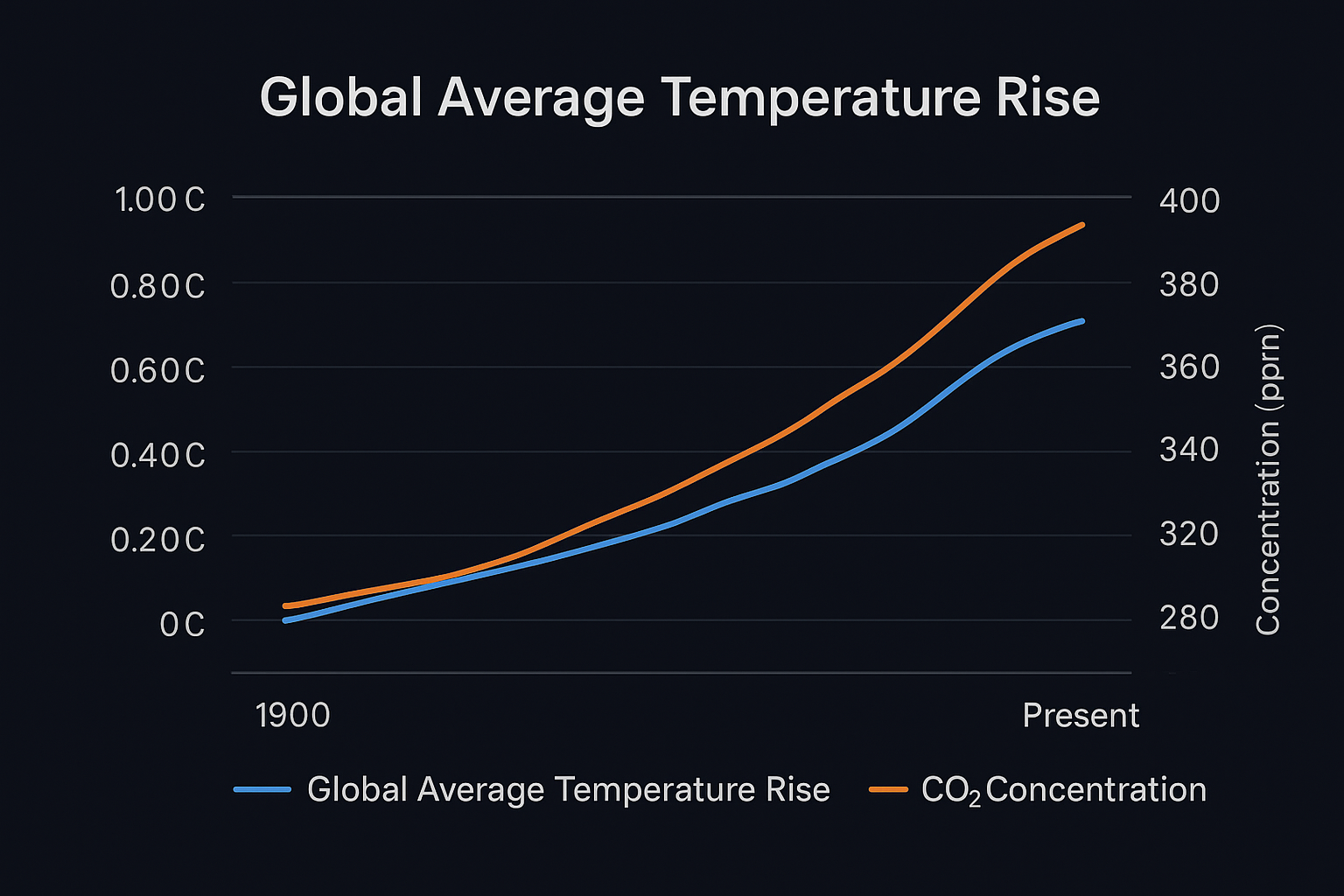
Since the Industrial Revolution, burning fossil fuels, cutting forests, and expanding industry have increased greenhouse gas levels in the atmosphere. This human-driven influence speeds up natural climate processes and pushes global temperatures higher. As a result, we now face rising heat, shifting seasons, and growing climate risks that demand clear, science-based responses.
Key Climate Change Causes
Climate change is driven by a mix of natural processes and human actions. Natural factors still play a role. Yet research shows that recent rapid warming is mostly caused by human activities that increase greenhouse gas concentrations.
Below are the main climate change causes linked to our energy use, land use, and economic systems.
Greenhouse Gases from Fossil Fuels
Burning coal, oil and natural gas for electricity, heat, and transport is the single largest driver of climate change. When these fuels burn, they release large amounts of carbon dioxide (CO₂) and other greenhouse gases.
These gases trap heat in the atmosphere, strengthening the natural greenhouse effect. As a result, more heat stays near Earth’s surface instead of escaping into space. Over time, this process pushes global average temperatures higher.
Every time we use petrol cars, diesel generators, or coal-based power, we add more CO₂. That is why clean energy and efficiency are central to any serious climate solution.
Deforestation and Land Use Change
Forests act like giant natural carbon banks. Trees absorb CO₂ from the air and store it in trunks, branches, roots, and soil. When forests are cut down or burned, this stored carbon returns to the atmosphere.
Deforestation for agriculture, logging, and urban growth reduces the planet’s ability to absorb emissions. It also destroys biodiversity and weakens local climate regulation. Healthy forests cool regions, protect soils, and support rainfall patterns.
Sustainable forestry, reforestation, and better land management are powerful tools to slow climate change and restore damaged ecosystems.
Agriculture and Industrial Emissions
Modern agriculture also contributes to climate change causes. Livestock such as cows and sheep release methane (CH₄) during digestion. This gas is far more potent than CO₂ over short time scales. Rice paddies, synthetic fertilizers, and poor manure management add both methane and nitrous oxide (N₂O) to the atmosphere.
Industrial sectors like cement, steel, and chemicals release additional greenhouse gases during production. Waste management systems, especially landfills, also emit methane as organic material breaks down.
Together, these sources show that climate solutions must cover energy, land, food, and industry. It is not only about power plants and cars.

The Science Behind Climate Change
Understanding the science behind climate change helps us see why urgent action is needed. Several core ideas explain how and why the planet is warming.
The Greenhouse Effect
The greenhouse effect is a natural process. Gases like CO₂, methane, and water vapour trap some of the Sun’s heat in the atmosphere. Without this effect, Earth would be too cold for life as we know it.
The problem begins when human activity adds extra greenhouse gases. Higher concentrations mean more trapped heat. Over time, global average temperatures rise. This is what we call global warming, one of the most visible outcomes of climate change.
The Carbon Cycle
The carbon cycle explains how carbon moves between the atmosphere, oceans, land, and living things. In a balanced system, plants absorb CO₂, oceans store some, and natural processes recycle the rest.
Human emissions have disrupted this balance by adding more carbon than natural systems can absorb. Oceans now absorb much of this excess, becoming more acidic. This extra acidity places marine life, including corals and shell-forming species, under stress.
Climate Models and Data
Climate scientists use complex models to simulate these processes. These models combine physics, chemistry, and large data sets to predict how the climate might change under different emission scenarios.
The results are clear. If emissions keep rising, we can expect more warming, more extremes, and more disruption to human and natural systems.
To explore how advanced physics helps us understand warming oceans, you can read our article on
quantum physics and ocean warming.
Environmental Impacts of Climate Change
Climate change is already reshaping natural systems worldwide. The effects are visible from polar ice to tropical forests.
Rising Seas and Coastal Risks
One of the most visible effects is rising sea levels. Melting glaciers and ice sheets, combined with warmer water that expands, cause oceans to rise. Coastal areas face more flooding, erosion, and storm damage.
Our piece on
America’s sinking cities
explores how rising seas threaten urban areas and infrastructure.
Extreme Weather and Ecosystem Stress
Extreme weather events are also becoming more intense. Heatwaves last longer, droughts become more severe, and storms bring heavier rainfall. These shifts stress ecosystems, degrade soil, and disrupt water cycles.
Forests may burn more often. Wetlands can dry out or flood. Rivers change flow patterns, affecting both wildlife and communities.
Biodiversity at Risk
Biodiversity is under pressure too. Many species struggle to adapt to rapid changes in temperature and rainfall. Some move to cooler regions or higher altitudes. Others face shrinking habitats and food sources.
Insects, birds, fish, and plants all respond differently, which can unbalance entire ecosystems. For example, our article
Silent Spring 2.0
dives into the hidden crisis of insect loss and its link to climate and human activity.
How Climate Change Affects Human Societies
Climate change is not just an environmental issue. It is a human story that touches health, food, water, and economies.
1. Health Risks
Rising temperatures increase heat-related illnesses and deaths. More frequent and intense heatwaves strain healthcare systems. They also widen the range of disease-carrying insects, spreading infections such as dengue or malaria to new regions.
Poor air quality, partly linked to fossil fuel use, worsens respiratory and heart conditions. Crowded cities with high traffic levels often experience the worst effects.
2. Food and Water Security
Food security is another concern. Unpredictable rainfall and extreme heat can damage crops, reduce yields, and stress livestock. Farmers in vulnerable regions often have fewer tools to adapt, putting their livelihoods and communities at risk.
Water resources face similar challenges. Some areas experience more droughts, while others see more floods. Melting glaciers can first increase river flows, then reduce them as glaciers shrink. Communities dependent on these water sources must rethink agriculture, energy, and basic water use.
3. Economic and Social Pressure
Economic impacts spread across sectors. Storms destroy homes, roads, and power lines. Heatwaves reduce productivity and push up energy demand. Disasters force governments to spend more on recovery instead of long-term development.
In many regions, those who contribute least to climate change causes are hit hardest by its effects. This raises serious questions about fairness and climate justice.
Global Responses and Climate Policy
Because climate change crosses borders, solutions must be global. International agreements create shared goals and frameworks for climate action.
International Climate Agreements
The Paris Agreement is a landmark example. Under this agreement, countries commit to limit global warming to well below 2°C, and ideally to 1.5°C above pre-industrial levels. Each nation submits a plan called a Nationally Determined Contribution (NDC) that outlines how it will cut emissions and adapt to impacts.
Climate Conferences and Negotiations
Global climate conferences, known as COP meetings, bring governments, scientists, businesses, and civil society together. These gatherings help track progress, increase ambition, and share best practices.
They are also a space where vulnerable nations can voice their concerns. Finance, technology sharing, and support for adaptation are key topics at these events.
The Role of Organisations and Policy Tools
Policy tools range from carbon pricing and clean energy incentives to regulations that phase out highly polluting technologies. At the same time, global policies to cut plastic waste and reduce CO₂ emissions act as important complements to climate-specific laws.
You can explore this in more detail in our article on
global policies to cut plastic waste and carbon emissions.
Mitigation: Cutting Emissions at the Source
Mitigation focuses on tackling climate change causes directly by reducing greenhouse gas emissions.
Key strategies include:
Switching to renewable energy such as solar, wind, and hydro
Improving energy efficiency in buildings, transport, and industry
Electrifying transport with EVs and better public transit
Protecting and restoring forests to absorb CO₂
Supporting low-carbon technologies like green hydrogen and advanced batteries
Innovation plays a major role. Clean energy solutions are becoming cheaper and more scalable. Digital tools and artificial intelligence can help optimize energy use and cut waste across sectors.
Our article
AI for climate change
explains how AI can support emissions tracking, smart grids, and climate-smart decision-making.
Adaptation: Learning to Live with a Warmer World
Even with strong mitigation, some warming is now locked in. Adaptation strategies help societies cope with current and future climate impacts.
Examples include:
Designing buildings and roads that can withstand floods, storms, and heat
Creating early warning systems for extreme weather events
Improving urban planning to reduce heat islands and manage stormwater
Supporting climate-resilient crops and farming methods
Protecting wetlands, mangroves, and natural buffers around coasts

Effective adaptation also means giving communities a voice in planning. Local knowledge is critical for designing solutions that match real needs and cultures.
What You Can Do Today
Climate change can feel overwhelming, but individual choices matter when millions of people act together.
Here are steps you can take:
Reduce energy use at home with efficient appliances and LED lighting
Choose sustainable transport by walking, cycling, carpooling, or using public transit
Cut waste by reducing plastic use, recycling, and composting when possible
Support renewable energy through your utility, rooftop solar, or community projects
Vote and advocate for strong climate policies and leaders who treat climate as a priority
Support sustainable products and companies that take emissions and environmental impact seriously
Technology is also unlocking new options, from smarter buildings to cleaner industry. Our article on
how smart technologies revolutionize forest management
shows how digital tools can help protect nature while supporting local communities.
Small actions do not replace systemic change, but they help drive it. When people and institutions move together, the impact scales fast.
Conclusion: Why Climate Change Causes Demand Action Now
Climate change is not a distant threat. It is a present reality shaped by clear, measurable climate change causes: burning fossil fuels, cutting forests, industrial emissions, and unsustainable land use. These drivers are disrupting weather systems, stressing ecosystems, and putting millions of lives and livelihoods at risk.
Yet the same systems that created the problem also hold the solutions. Clean energy, smarter cities, better land stewardship, and fair climate policies can still bend the curve. Every year of delayed action makes the challenge harder. Every year of bold action makes a safer, more stable future more likely.
Understanding climate change causes is the first step. Acting on them—locally, nationally, and globally—is the next. The choices we make today will shape the climate, and the quality of life, for generations to come.