
3 unanswered questions about the IndiGo Flight Disruption Crisis
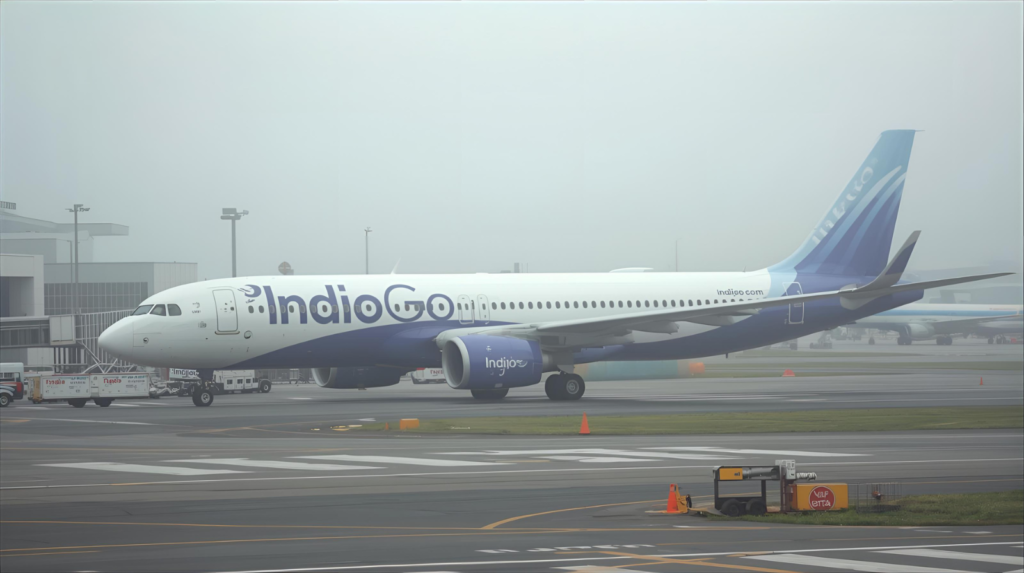
This IndiGo Flight Disruption Crisis highlighted how quickly operations can collapse when staffing and scheduling fail to align. The IndiGo flight disruption crisis in early December left thousands of passengers across India frustrated, stranded, and searching for answers. What began as a series of unexpected delays quickly escalated into one of the biggest operational breakdowns the airlines have faced, with hundreds of flights cancelled in a single day. Busy airports like Delhi, Mumbai, Bengaluru, and Hyderabad turned chaotic as long queues formed, travellers scrambled to rebook tickets, and many missed important events, from weddings to business meetings.
The situation spiralled when the airline struggled to adjust to the newly implemented FDTL (Flight Duty Time Limitations) regulations, which tightened pilot work-hour rules. With insufficient crew available to operate scheduled flights, large portions of IndiGo’s network collapsed almost overnight. Passengers described the experience as stressful and disorganised, with last-minute cancellations, unclear communication, and extremely limited rebooking options.
The heart of the IndiGo flight disruption crisis lies in a perfect storm of stricter aviation regulations and seasonal staffing challenges. The turning point was the enforcement of the revised FDTL (Flight Duty Time Limitations) rules introduced by India’s aviation regulator, DGCA. These rules were designed to reduce pilot fatigue — a serious safety concern — but they also placed tighter restrictions on how long pilots could fly and how much rest they needed between duties.
Key FDTL Changes That Triggered the Crisis
- Longer mandatory weekly rest periods for pilots
- Reduced duty hours, especially for night operations
- Lower limits on consecutive flight sectors a pilot could operate
These changes meant airlines needed more pilots per day to run the same schedule. But IndiGo, operating India’s largest fleet and the densest flight network, was not fully prepared for this sudden increase in staffing requirements.
December is already a demanding month for Indian aviation. Winter fog, low visibility, and shorter operational windows strain flight schedules — and any delay requires more pilots to stay available. At the same time, many pilots take planned leave during this period, which naturally reduces the workforce.
So when the FDTL rules kicked in, IndiGo found itself with far fewer pilots than needed to legally operate the day’s schedule. Within hours, flights began getting cancelled, one after another, until the network reached a breaking point.
IndiGo reportedly tried to adjust schedules and call in additional crew, but the shortage was too deep. With pilots hitting their FDTL limits earlier each day, entire routes had to be cut. What began as a rostering issue quickly spread across airports, leaving thousands of passengers stranded and confused.
As India tries to recover from the IndiGo flight disruption crisis, several pressing questions remain unanswered — questions that point to deeper issues in planning, forecasting, and operational preparedness.
1. Why didn’t IndiGo reduce flight bookings despite knowing the risks?
IndiGo was aware of three major factors well in advance:
- the enforcement of stricter FDTL rules,
- the challenging winter weather, and
- a tight pilot roster that was already stretched.
Yet, the airline continued to operate its full schedule, selling seats for around 2,300 flights a day, as if nothing had changed.
This raises a critical question:
If the airline knew the staffing and regulatory constraints, why wasn’t the capacity cut earlier? This is the core issue behind the IndiGo Flight Disruption Crisis and why passengers felt misled.
Most airlines adjust their network proactively when they anticipate shortages — reducing frequencies, combining routes, or temporarily halting low-demand services. IndiGo, however, kept its schedule unchanged until the system collapsed, which left passengers bearing the brunt of the chaos.
2. FDTL rules reduce pilot availability by about 25% — so how did cancellations soar past 1,000 flights?
A key contradiction puzzled passengers and experts:
The revised FDTL rules affect about 25% of a pilot’s total flight hours.
But IndiGo ended up cancelling over 1,000 flights in a single day — nearly 45% of its entire network.
This gap suggests that the crisis wasn’t caused by FDTL alone. It points to deeper operational issues, such as:
underestimating how many additional pilots were needed,
miscalculated rostering patterns,
insufficient reserve crew during peak winter,
and a possible buildup of accumulated fatigue hours that pushed many pilots beyond legal limits at the same time. This operational mismatch became one of the biggest drivers of the IndiGo Flight Disruption Crisis, not just FDTL rules alone.
In short, while FDTL was the trigger, the scale of cancellations indicates that the underlying system was already fragile and overstretched. his kind of breakdown is often a symptom of weak governance and poor long-term planning rather than a single rule change. We explored a similar pattern of “rules without robust implementation” in our article on the AI governance gap and why 95% of firms lack proper frameworks.
3. The rule was announced in January 2024 — so why wasn’t the airline better prepared?
What makes the situation more concerning is the timeline.
The updated FDTL regulations were announced in January 2024, giving airlines nearly two years to prepare.
During this period, IndiGo expanded rapidly — adding new routes, more frequencies, and larger aircraft orders — but did not hire pilots at the pace required to match its growth plus the upcoming rule change.
- Industry analysts argue that IndiGo should have:
- ramped up pilot recruitment earlier,
- restructured winter schedules,
- and added more buffer crew to absorb seasonal disruptions.
Instead, the airline continued growing its network aggressively, assuming its existing pilot strength would remain sufficient. When the new rules finally took effect in November 2025, the gap between required pilots and available pilots became impossible to bridge. When a single company grows too fast and becomes the backbone of a system without adding the right safety buffers, the entire ecosystem becomes fragile.
The lack of long-term preparation is a direct reason why the IndiGo Flight Disruption Crisis escalated so quickly.
We discuss this kind of risk in more detail in our piece on the dangers of centralized AI systems and how to safeguard the future.
A Crisis That Exposed Passenger Helplessness and a Growing Monopoly
The IndiGo flight disruption crisis did more than delay travel plans — it exposed how vulnerable Indian passengers have become in a market dominated by a single major airline. With more than half of India’s domestic market under its control, IndiGo is the only consistently profitable full-scale carrier left. This puts enormous power in the hands of one airline, leaving travellers with fewer choices and very limited flexibility during emergencies like this.
Passengers Left Stranded With No Alternatives
As IndiGo began cancelling flights in the hundreds, the ripple effect was devastating. For many travelers, the IndiGo Flight Disruption Crisis turned routine journeys into a stressful and exhausting experience.
Other airlines simply didn’t have enough seats to absorb the overflow. Many passengers had no choice but to:
wait hours in long queues for rebooking,
pay 3–5× higher ticket prices on other airlines,
postpone travel altogether,
or spend the night in airports with no clarity on the next steps.
Families travelling with children, elderly passengers, and those with urgent medical or work-related commitments described the experience as “helpless,” “unfair,” and “traumatic.” The lack of transparent communication from the airline only added to the frustration.
The DGCA officially introduced the updated Flight Duty Time Limitations to improve pilot safety and reduce fatigue. You can read the official guidelines from DGCA
A Monopoly-Like Situation Leaves Passengers Powerless
A decade ago, travellers had multiple competitive options — Jet Airways, Kingfisher, Go First, SpiceJet at full strength, Vistara, and Air India as separate entities. Today, the landscape is drastically different:
- IndiGo dominates domestic aviation,
- Air India–Vistara merger is still stabilising,
- Smaller carriers operate limited fleets with high fares and fewer routes.
- This means that when IndiGo struggles, the entire country feels the shock.
- If Nothing Changes, This Crisis Will Repeat
What worries analysts is that this might not be a one-time failure. The IndiGo Flight Disruption Crisis should be a wake-up call for India’s aviation ecosystem.
Unless deeper structural fixes are implemented, another IndiGo Flight Disruption Crisis is only a matter of time.
If IndiGo continues operating with the same staffing levels, aggressive scheduling, and limited backup crews, a similar collapse is inevitable in the future:
- winter fog seasons,
- sudden rule changes,
- pilot fatigue spikes,
- or unexpected operational hurdles.
Unless there is a long-term fix — more pilots, better rostering, realistic scheduling, and stronger oversight — the airline could return to normal temporarily, only to face the same breaking point again in a few months.
A Warning for the Entire Aviation System
This crisis showed that the issue is bigger than one airline. It reflects:
- a fragile aviation ecosystem,
- overdependence on a single carrier,
- and a lack of safety buffers in scheduling and staffing.
Passengers are demanding answers not just for what happened, but for how such a massive collapse was even possible in the first place.
- December 8, 2025
- asquaresolution
- 8:53 pm