

India First Gene-Edited Sheep Turns One — What Scientists Are Learning Now
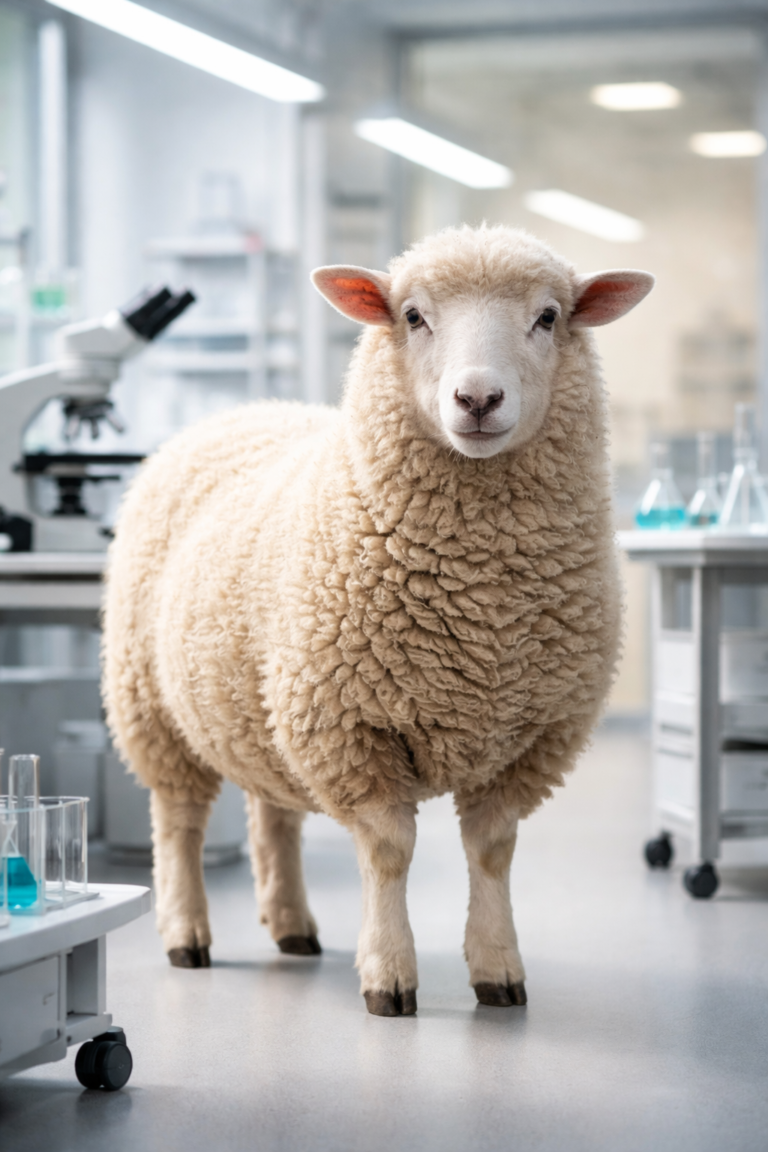
India first gene-edited sheep has just turned one year old, and scientists say it is “growing well.” Born on 16 December 2024, the sheep—named Tarmeem—represents a quiet but historic breakthrough in Indian biotechnology that could reshape agriculture, medicine, and genetic research for decades to come.
While global attention often focuses on artificial intelligence and space exploration, this achievement signals something equally transformative: India has entered the era of precision genetic engineering in living animals.
A Scientific First for India
Tarmeem is not an ordinary sheep. It is India’s first successfully gene-edited livestock animal, developed by Indian scientists using advanced gene-editing techniques similar to CRISPR-Cas9, a technology that allows researchers to precisely alter DNA.
Unlike traditional genetic modification, gene editing does not insert foreign DNA. Instead, it modifies existing genes—making it faster, more accurate, and potentially safer.
According to scientists involved in the project, Tarmeem has shown:
Normal growth patterns
Stable health indicators
No visible developmental abnormalities
This early success is critical. In gene-editing research, the first year of life is often the most revealing in terms of genetic stability and long-term viability.
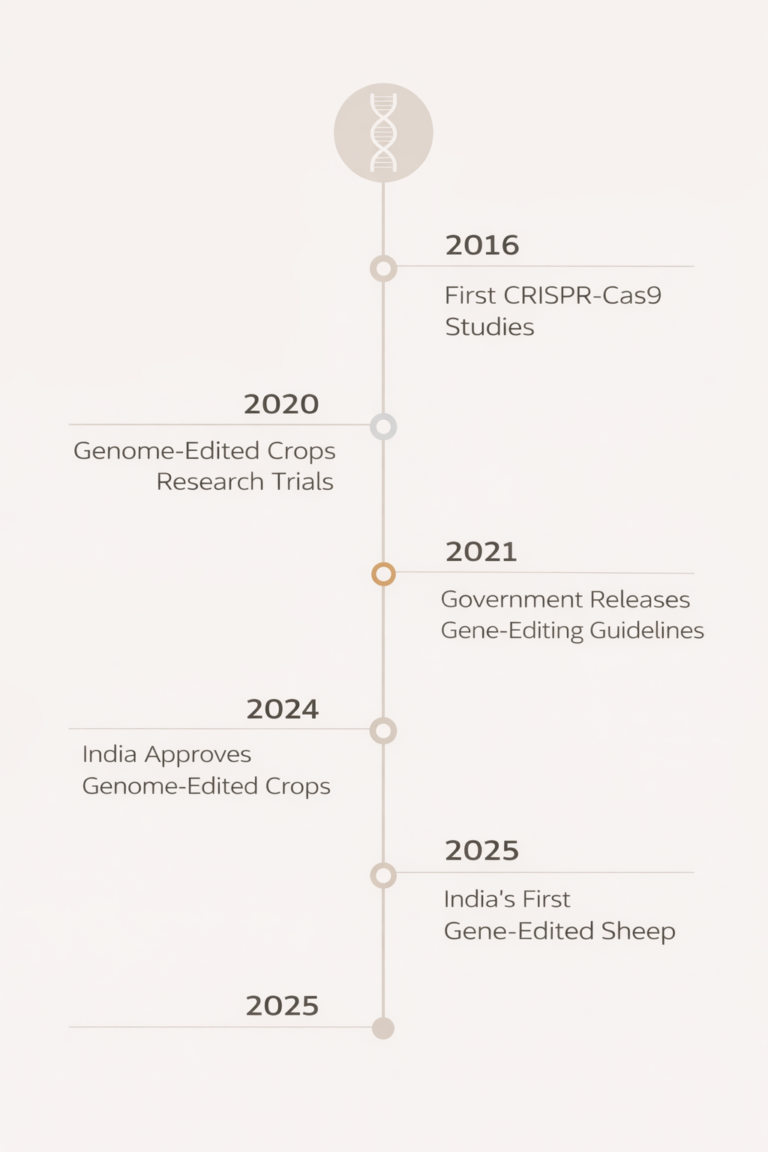
Why This Matters More Than It Sounds
At first glance, a single sheep may not seem revolutionary. But in scientific terms, firsts change everything.
India’s first gene-edited sheep proves that:
Indian research institutions can execute complex life-science innovations
Advanced biotechnology is no longer limited to Western labs
India can develop homegrown solutions for agriculture and medicine
This milestone places India alongside countries like the United States, China, and Japan in applied animal gene-editing research.
How Gene Editing in Animals Actually Works
Gene editing allows scientists to:
Switch off harmful genes
Enhance beneficial traits
Study disease resistance
Improve productivity ethically
In livestock, gene editing is being explored to:
Increase disease resistance
Reduce antibiotic dependence
Improve climate resilience
Enhance nutritional value
In Tarmeem’s case, researchers focused on genetic precision rather than commercial traits, making this a foundational scientific experiment rather than an industrial one.
For a broader explanation of how cutting-edge science is reshaping society, see our analysis on
👉 How advanced technologies are redefining modern science
Ethical Questions Scientists Cannot Ignore
Every major scientific leap brings ethical responsibility.
Gene editing in animals raises difficult but necessary questions:
Where do we draw ethical boundaries?
How do we prevent misuse?
Who regulates long-term impacts?
India currently follows strict ethical oversight through institutional review boards and national biotechnology guidelines. Unlike unregulated experimentation, Tarmeem’s development occurred under controlled, transparent research conditions.
Global organizations such as the World Health Organization (WHO) and Nature Biotechnology have repeatedly emphasized that responsible gene editing must balance innovation with ethics.
(Source context: WHO and Nature coverage on gene-editing ethics)
What Scientists Are Watching Closely Now
Turning one year old does not mean the experiment is complete—it means it’s entering its most critical observation phase.
Researchers are monitoring:
Reproductive health
Genetic stability across cell divisions
Long-term immunity patterns
Potential intergenerational effects
If Tarmeem remains healthy over multiple years, it opens the door to next-generation livestock research in India.
This mirrors patterns seen in other technological revolutions, where early stability determines long-term adoption—similar to how AI systems moved from experiments to infrastructure.
Implications for Indian Agriculture
India’s agriculture sector supports over half a billion people. Even small improvements in livestock health and productivity can have enormous economic and social impact.
Gene editing could eventually help:
Reduce livestock disease outbreaks
Improve farmer income sustainability
Minimize environmental strain
Enhance food security
However, scientists stress that commercial use is still years away. The current focus remains research, safety, and ethical governance.
Medicine, Genetics, and Beyond
Animal gene-editing research often leads to medical breakthroughs.
Globally, gene-edited animals are already being used to:
Study genetic diseases
Test therapies
Improve organ transplantation research
India’s success with Tarmeem strengthens its ability to contribute meaningfully to global biomedical science, not just agriculture.
This aligns with a broader trend we discussed earlier: science and technology are increasingly shaping national influence, much like AI and semiconductors are reshaping global power.
How This Breakthrough Fits into Global Science
Internationally, gene-editing research is accelerating.
According to coverage from outlets like BBC Science, Nature, and MIT Technology Review, nations are racing to master biotechnology—not for headlines, but for long-term resilience.
India’s first gene-edited sheep signals:
Scientific maturity
Regulatory readiness
Research independence
It is a quiet step—but one with long echoes.
Should the Public Be Concerned?
Public concern around gene editing is understandable. Misinformation often spreads faster than science.
Key facts to remember:
Gene editing ≠ uncontrolled mutation
No foreign DNA insertion
Strict monitoring protocols
Transparent scientific reporting
Responsible science thrives when the public is informed—not alarmed.
The Bigger Picture: A Turning Point for Indian Science
Tarmeem’s first birthday may not trend on social media, but history often records quiet milestones more than loud announcements.
Much like early space launches or early computing experiments, this moment may later be remembered as the beginning of a new scientific era for India.
India’s first gene-edited sheep is not just an experiment.
It is a statement of capability.
Conclusion: A Small Animal, A Large Future
As Tarmeem continues to grow, so does the significance of this achievement.
India has demonstrated that it can responsibly explore one of the most powerful tools in modern biology. What comes next will depend not only on science—but on policy, ethics, and public trust.
For now, one thing is clear:
India first gene-edited sheep marks a quiet but profound step into the future of genetic science.
- December 27, 2025
- asquaresolution
- 8:18 pm

Trump Orders Release of UFO & Alien Files in 2026 — Political Showdown with Obama Sparks Transparency Debate
21 February 2026 | by A Square Solutions
Read More → 
Prince Andrew Arrest 2026: Epstein Fallout and the Monarchy’s Accountability Crisis
20 February 2026 | by A Square Solutions
Read More → 
How to Convert Image to PDF Online for Free (Step-by-Step Guide)
19 February 2026 | by A Square Solutions
Read More → 
US Plans Online Portal to Bypass European Content Bans — A New Digital Sovereignty Battle Begins
19 February 2026 | by A Square Solutions
Read More → 
AI in FMCG Industry (2026): 9 Real Use Cases Driving Revenue, Automation & ROI
18 February 2026 | by A Square Solutions
Read More →