
AI for Predicting and Responding to Traffic Congestion in Toronto: A Smart Move
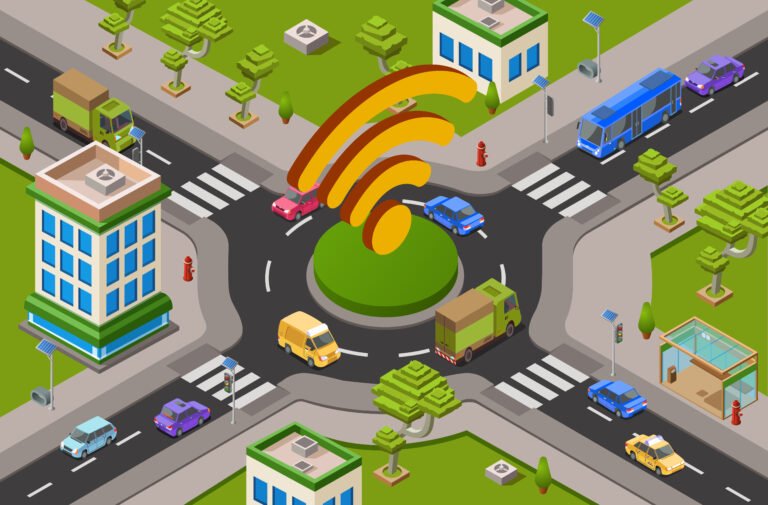
Urban mobility is one of the most complex challenges modern cities face. With rising population density and infrastructure strain, traditional traffic management systems are no longer sufficient. Artificial intelligence is enabling cities like Toronto to shift from reactive control to predictive traffic optimization powered by real-time data analysis.
What This Means for Businesses Beyond Transportation
The same predictive intelligence used in traffic systems is now transforming industries such as logistics, retail, and digital marketing. AI-driven forecasting helps organizations anticipate demand, allocate resources efficiently, and automate decision-making processes.
In recent years, the city of Toronto has begun to use artificial intelligence (AI) to predict and respond to traffic congestion. This has helped to reduce travel times and improve the efficiency of the city’s transportation system.Smart mobility initiatives have been widely analyzed by organizations such as McKinsey & Company, highlighting AI’s role in improving urban efficiency.
Organizations adopting AI-driven systems can follow the structured approach outlined in our AI adoption guide.At A Square Solutions, similar predictive models are implemented through our AI-powered digital solutions to help businesses operate more efficiently.Here are a few specific ways that Toronto is using AI to predict and respond to traffic congestion:
- AI-powered traffic monitoring systems: AI-powered traffic monitoring systems can be used to collect and analyze data on traffic conditions in real time. This data can then be used to predict where and when congestion is likely to occur.
- AI-powered traffic signal management systems: AI-powered traffic signal management systems can be used to adjust traffic signal timings in real time to reduce congestion. For example, these systems can be used to give priority to buses or to vehicles on major roadways.
- AI-powered navigation systems: AI-powered navigation systems can be used to provide drivers with real-time information on traffic conditions and the best routes to take. This can help drivers to avoid congestion and save time.
The use of AI to predict and respond to traffic congestion has had a number of benefits for Toronto. For example, a study by the University of Toronto found that the use of AI-powered traffic signal management systems has reduced travel times by an average of 10%.
You can see how intelligent automation delivers measurable outcomes in our case studies.AI traffic solutions rely on continuous data ingestion from sensors, GPS systems, and behavioral models. These insights allow municipalities to dynamically adjust infrastructure usage—an approach mirrored in modern enterprises using AI for customer analytics and operational optimization.
In addition to reducing travel times, the use of AI to predict and respond to traffic congestion has also had a number of other benefits, such as:
- Reduced pollution: Traffic congestion is a major source of air pollution. By reducing traffic congestion, AI can help to improve air quality.
- Improved safety: Traffic congestion can lead to accidents. By reducing traffic congestion, AI can help to improve safety for drivers, cyclists, and pedestrians.
- Increased economic activity: Traffic congestion can have a negative impact on economic activity by making it more difficult for people to get to and from work and by discouraging businesses from locating in the city. By reducing traffic congestion, AI can help to improve the city’s economy.
Overall, the use of AI to predict and respond to traffic congestion is a positive development for Toronto. AI has helped to reduce travel times, improve air quality, and increase economic activity.