
AI for Developing New Diagnostic Tools and Treatments for Diseases in the UK
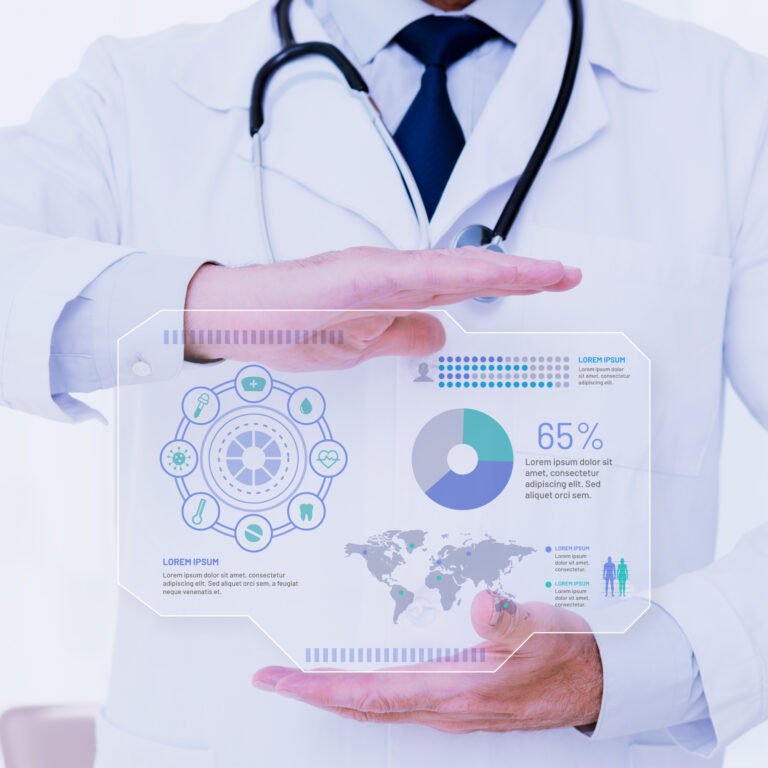
Artificial intelligence is redefining healthcare delivery by enabling faster diagnosis, predictive analytics, and personalized treatment strategies. In the United Kingdom, the NHS has emerged as a global example of how AI can enhance clinical decision-making while improving efficiency across large-scale healthcare systems.
Lessons for Digital Transformation Across Industries
The same principles driving AI adoption in healthcare—data-driven decision-making, automation of repetitive analysis, and predictive modeling—are now being applied across sectors such as marketing, finance, logistics, and customer experience. Organizations that invest in intelligent systems gain speed, accuracy, and scalability advantages. To see how these AI capabilities translate into business environments, read our introduction to digital marketing and AI. Organizations beginning this journey can follow structured adoption steps outlined in our AI implementation guide.
Here are a few specific examples of how the NHS is using AI to develop new diagnostic tools and treatments for diseases:
- AI-powered cancer diagnostics: AI is being used to develop new ways to diagnose cancer. For example, AI-powered systems can be used to analyze medical images, such as X-rays and MRI scans, to identify cancer cells. AI can also be used to analyze genetic data to identify people who are at risk of developing cancer.
- Personalized cancer treatment: AI is being used to develop personalized treatments for cancer patients. For example, AI-powered systems can be used to analyze a patient’s tumor and other data to identify the best treatment options. AI can also be used to monitor a patient’s response to treatment and to adjust the treatment plan accordingly.
- Drug discovery: AI is being used to accelerate the drug discovery process. For example, AI-powered systems can be used to screen millions of potential drug candidates to identify those that are most likely to be effective against a particular disease.
AI systems are particularly effective in environments that generate large datasets. By identifying patterns invisible to manual analysis, machine learning models can support faster innovation cycles—whether in clinical research or customer analytics.
The use of AI to develop new diagnostic tools and treatments for diseases has the potential to revolutionize healthcare in the UK. AI can help to improve the quality of care for patients, reduce the cost of healthcare, and save lives.
At A Square Solutions, similar data-driven frameworks are applied through our AI-enabled digital services to help businesses scale intelligently.Here are a few additional benefits of using AI to develop new diagnostic tools and treatments for diseases:
- Improved accuracy: AI-powered systems can be more accurate than human doctors at diagnosing diseases, especially rare or complex diseases.
- Faster diagnosis: AI-powered systems can diagnose diseases more quickly than human doctors, which can lead to earlier treatment and better outcomes for patients.
- More personalized treatments: AI can be used to develop personalized treatments for patients, which can be more effective and have fewer side effects than traditional treatments.
- Reduced costs: AI can help to reduce the cost of healthcare by automating tasks and improving the efficiency of the healthcare system.
Overall, the use of AI to develop new diagnostic tools and treatments for diseases is a positive development for the UK. AI has the potential to improve the quality of care for patients, reduce the cost of healthcare, and save lives.
As AI continues to develop, it is likely that we will see even more innovative ways to use AI to develop new diagnostic tools and treatments for diseases. This is an exciting time for healthcare in the UK, and AI is playing a leading role in this transformation.