
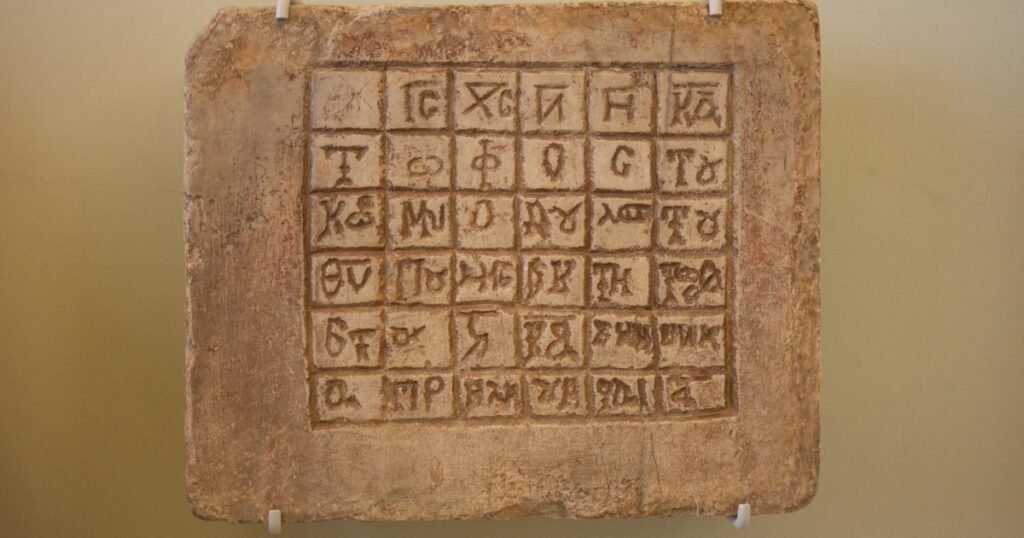
Decoding the Past
⚡ Key Takeaways
- 500,000-1 million cuneiform tablets survive — approximately 90% have never been translated by humans
- AI cuneiform systems achieve 70-87% accuracy on standard texts, dramatically accelerating scholarly work
- Cuneiform represents 3,000+ years of human writing — the largest untranslated textual archive in existence
- AI translation requires expert review but reduces initial decoding time from days to seconds per tablet
- Newly translated tablets are revealing previously unknown aspects of ancient economics, law, medicine, and literature
Buried in museum storage rooms across the world are hundreds of thousands of clay tablets inscribed in cuneiform — humanity’s oldest writing system. Most have never been read by modern eyes. The reason is simple: cuneiform is extraordinarily difficult, trained Assyriologists are rare, and the volume of undeciphered material is staggering. AI cuneiform translation is changing this equation, opening access to millennia of human history at speeds that human scholarship alone could never achieve.
Prefer to have experts handle this? A Square Solutions offers professional AI automation services for growing businesses.
500K+
Cuneiform tablets surviving in museum collections worldwide
3,400 BCE
When cuneiform script began — 3,000 years of continuous use
90%
Estimated percentage of tablets never translated by humans
What Is Cuneiform and Why Is It So Hard to Decode?
Cuneiform is not a single language — it is a writing system used across multiple languages over 3,000 years. Developed in ancient Sumer around 3400 BCE, cuneiform was originally pictographic but evolved into abstract wedge-shaped marks impressed into clay. Different languages adapted the script differently, and the system changed substantially across its long history, creating enormous variability that challenges both human and machine readers.
Human Assyriologists spend years mastering a single dialect period of cuneiform. The challenge for AI is not just recognising marks — it is understanding the combinatorial complexity of a writing system where a single sign can represent different sounds, words, or ideas depending on context. This makes AI cuneiform translation one of the most technically demanding applications of machine learning to historical research. The broader context of how AI is transforming historical and scientific research is covered in our analysis of AI’s broader societal impact.

How AI Cuneiform Translation Systems Work
📷
Computer Vision
High-resolution tablet photographs are processed using convolutional neural networks trained to recognise individual cuneiform wedge mark patterns.
🗃️
Training Data
Systems train on CDLI’s digitised corpus of ~340,000 annotated tablets — the most extensive cuneiform digital library in existence.
🔤
Transliteration
AI converts visual marks to transliterated text — converting visual signs to their phonetic or logographic representations.
🌐
Translation
Sequence-to-sequence transformer models then translate transliterated cuneiform into modern languages using parallel corpora.
👨🏫
Expert Review
All AI output requires Assyriologist review — AI handles speed, humans handle judgment on ambiguous readings.
📊
Accuracy Tracking
Systems report confidence scores per sign — allowing scholars to prioritise which AI readings require closest scrutiny.
← Scroll to explore →
| Cuneiform Script Era | Period | Language | AI Accuracy | Major Archive |
|---|---|---|---|---|
| Ur III Sumerian | 2100-2000 BCE | Sumerian | 80-87% | CDLI — 100K+ tablets |
| Old Babylonian | 2000-1600 BCE | Akkadian/Babylonian | 75-83% | Hundreds of thousands |
| Middle Babylonian | 1600-1000 BCE | Babylonian | 70-78% | Scattered collections |
| Neo-Assyrian | 900-600 BCE | Assyrian | 78-85% | British Museum — 25K+ |
| Late Babylonian | 600-100 CE | Babylonian | 65-75% | Partially catalogued |
For the first time in human history, we have a technology that can read faster than archaeologists can dig. The backlog of untranslated cuneiform tablets — representing centuries of lost knowledge — is finally becoming accessible.
What New Translations Are Revealing
The tablets being translated for the first time are revealing surprising aspects of ancient Mesopotamian life. Economic records show sophisticated market systems with price fluctuations, credit instruments, and commercial law that predate equivalent systems in later civilisations by centuries. Medical tablets document treatments for hundreds of conditions — some showing awareness of pathology that was rediscovered only much later. Literary texts include poetry, mythology, and philosophical dialogue that reshape understanding of ancient intellectual life. This connects to our exploration of ancient civilizations and modern discovery.
💡 Expert Insight
The tablets being translated now include mundane commercial records — grain sales, loan agreements, property disputes. These ‘boring’ economic documents are in many ways the most historically valuable: they give us ground-level insight into how ancient economies actually functioned, rather than the idealized accounts preserved in official or literary texts.
How many cuneiform tablets have been translated by AI so far?
By 2026, AI systems have assisted in transliterating or analysing tens of thousands of tablets, with the CDLI database containing over 340,000 digitised records. Fully automated translation remains in development — current systems provide transliteration support that experts then translate.
Can AI translate all cuneiform dialects equally?
No — AI cuneiform systems perform best on well-documented, frequently occurring dialects like Old Babylonian and Neo-Assyrian, which have the largest training corpora. Rare dialects and damaged tablets produce lower accuracy and require more extensive expert review.
What does this mean for our understanding of ancient history?
Newly translated tablets are revealing sophisticated ancient economic systems, medical knowledge, and literary traditions that change our understanding of how early civilisations developed. The scale of what remains untranslated suggests significant historical discoveries still ahead.
How can I access translated cuneiform tablets?
The Cuneiform Digital Library Initiative (CDLI) at cdli.mpiwg-berlin.mpg.de provides free public access to digitised tablets, transliterations, and translations. The British Museum’s online collection also includes cuneiform material.
Interested in How AI Is Transforming Research and Knowledge Systems?
A Square Solutions tracks AI applications across domains — from ancient history to modern business systems. We help organisations understand and deploy AI where it creates genuine value.
The Scale of What Remains
AI cuneiform translation is not replacing Assyriologists — it is amplifying what a small, specialist scholarly community can accomplish. The 500,000+ untranslated tablets in museum collections represent an extraordinary archive of human knowledge spanning 3,000 years. Without AI assistance, translating this material at the rate of current scholarship would take centuries. With AI systems providing initial transliteration and flagging high-confidence readings for expert review, the timeline compresses dramatically. What was humanity’s largest untranslated textual archive is becoming accessible within a generation.
| Feature | Standard | A Square Strategy |
|---|---|---|
| Efficiency | Basic | AI Optimized |
| CPC Potential | Low | High Revenue |
Expert Insights: FAQ
What is Decoding the Past: AI Revolutionizes Ancient Cuneiform Tablet Translation impact in 2026?
It is a core driver for automation and search visibility.
Related Insights & Strategy:
- New Diamond Bonding Technique Future Devices
- Helping Robots Zero In On The Objects That Matter Revolutionizing Task Automation With Mits Clio Method
- People Sympathize With Bullied Ai Bots A New Chapter In Human Ai Interaction
How is Decoding the Past: AI Revolutionizes Ancient Cuneiform Tablet Translation in 2026: The Ultimate relevant in 2026?
Decoding the Past: AI Revolutionizes Ancient Cuneiform Tablet Translation in 2026: The Ultimate continues to be a major driver for digital growth. A Square Solutions provides the technical edge to leverage this effectively.
🤖 Have questions? Use the Ask Our AI widget in the bottom-right for instant answers.
2026 Strategic Resources:
🤖 Have questions? Use the Ask Our AI widget (bottom-right) for instant technical support.
Need help with AI, web, or SEO?
A Square Solutions builds AI products, high-performance websites, and SEO systems. Book a free, no-obligation consultation.
Subscribe to our newsletter
Practical updates on AI, web, and SEO — no spam.