
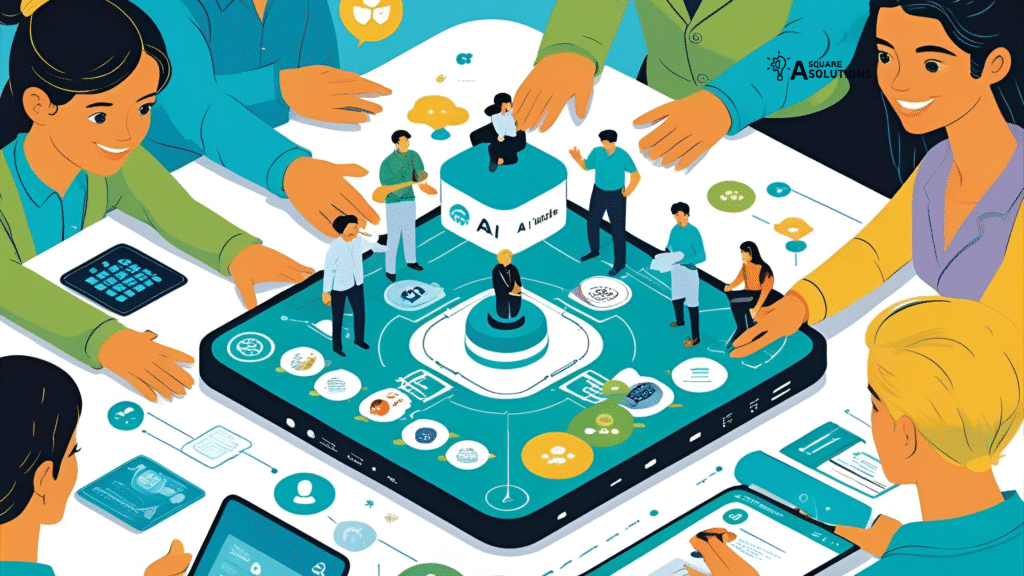
rethinking impact —
Rethinking AI’s Impact on Workers: New Study Reveals Surprising Benefits
📚 Further Reading
📚 Related:
AI’s impact on societyAI safety treatycultural differences in AIprotecting children’s digital identity
Introduction: AI Impact on Workers Is Not What We Thought
The global conversation around automation often paints artificial intelligence (AI) as a threat—stealing jobs, reducing job satisfaction, and widening inequality. For years, the dominant narrative suggested that the AI impact on workers would be overwhelmingly negative, especially for routine, low-skill roles.
But a groundbreaking new study from the University of Pittsburgh challenges this assumption. Instead of harming workers, the research finds that AI can improve physical health, boost mental well-being, and increase job satisfaction for millions of employees.
This article breaks down what the study reveals—and why the AI-workplace transformation might be far more positive than expected.
Key Findings: AI as a Silent Workplace Ally
New evidence shows that the AI impact on workers is often beneficial, reshaping how people work without stripping away their dignity or security.
1. Reduced Physical Strain and Workplace Injuries
The study reports:
23% reduction in musculoskeletal disorders
Significant drop in workplace injuries
Highest improvement among workers older than 45
AI tools—like automated task managers, ergonomic monitoring systems, and predictive safety analytics—helped reduce physical strain.
Example: AI-guided workflow optimization in warehouses prevents risky lifting, predicts fatigue patterns, and removes repetitive manual tasks.
This does more than reduce injuries—
it increases productivity, reduces sick leave, and improves long-term worker retention.
🔗 External source for credibility:
MIT Technology Review – Workplace Automation & Safety
2. Mental Health Boosts: Less Stress, More Satisfaction
Workers using AI reported:
Lower daily stress
Higher job satisfaction
Better work-life balance
Increased “career optimism”
AI handles repetitive tasks → workers focus on meaningful tasks → reduced burnout.
Employees said they felt empowered, not replaced, when working alongside AI systems that assisted instead of controlled.
The Education Paradox: High-School Graduates Benefit the Most
One surprising finding:
Workers with only high-school education gained the most physical and mental health benefits from AI adoption.
Why?
AI reduces repetitive, physically demanding tasks often assigned to non-degree workers.
Meanwhile, college-educated workers saw:
More role expansion
Higher responsibility
Need for continuous upskilling
This highlights the need for:
better vocational AI training
adaptive upskilling programs
workplace redesigns that support all education levels
How AI Is Changing Jobs—Without Replacing Humans
The study emphasizes a powerful concept:
“Collaborative Automation”
AI + humans working together → better outcomes.
Auto Manufacturing Example
AI robots now handle repetitive assembly work.
Humans shift to:
quality control
supervision
problem-solving
system calibration
Instead of job loss → job transformation.
Healthcare Example
AI diagnoses patterns in medical data.
Doctors spend more time:
interacting with patients
making informed decisions
personalizing care
AI assists, but doesn’t replace human empathy. Read how AI is transforming medical imaging: AI transforming medical systems
Case Studies: Where AI Helps Workers the Most
Manufacturing
Companies like Ford and BMW use AI for:
predictive maintenance
safety analytics
error detection
workflow automation
Workers focus on higher-skilled tasks.
Healthcare
AI helps:
analyze patient scans
predict illness
automate administrative work
Workers spend more time on care, not paperwork. See how advanced AI agents are shaping the future:
Wage Trends: No Evidence of Wage Decline
Contrary to fear-driven predictions:
No broad wage decline from AI adoption
High-skill roles saw wage increases
Demand for AI-augmented roles is rising
Mid-skill jobs require reskilling, not elimination
This means the AI wave is uneven, but not universally harmful.
Wage Trends: No Evidence of Wage Decline
The study doesn’t deny risks.
Potential Challenges
Job displacement in routine roles
Need for rapid upskilling
Data privacy issues
Algorithmic bias
Lack of transparency in AI decision-making
Organizations adopting AI must follow:
ethical guidelines
transparent AI policies
strong worker protection frameworks
Governments and employers must be proactive—not reactive—in building AI-ready workforce structures.
Conclusion: The AI Impact on Workers Is More Positive Than Expected
The new research flips the narrative:
Instead of destroying jobs, AI is:
improving safety
enhancing job satisfaction
supporting older workers
reducing stress
enabling “human-AI collaboration”
AI isn’t replacing humans—it’s reshaping work so humans can do it better.
The future workforce isn’t AI vs humans.
It’s AI × humans, working together.