
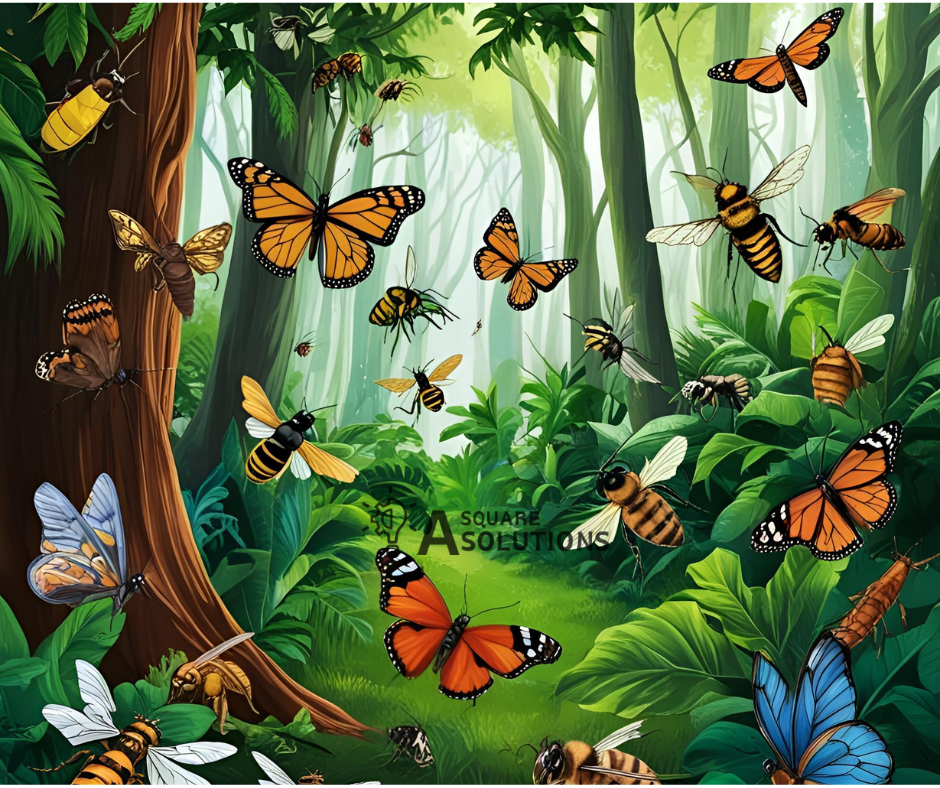
Introduction to the Insect Collapse Crisis
📚 Further Reading
The recent phenomenon of global insect collapse has garnered increasing attention from scientists, policymakers, and environmentalists alike. While insects may seem inconspicuous, they play an essential role in maintaining the functionality and health of ecosystems. They are integral to processes such as pollination, nutrient cycling, and serving as food for a multitude of larger species. The startling findings from Binghamton University’s 2025 report indicate that insect populations have witnessed an alarming decline of 45% since the year 2000, thereby raising critical questions about biodiversity and ecosystem sustainability.
The report emphasizes the multifaceted drivers of this insect decline, which include habitat loss, pesticide use, climate change, and pollution. Collectively, these factors create a hostile environment that can decimate insect populations, leading to cascading effects throughout the food web. The implications of such a decline are profound and wide-ranging, affecting everything from agricultural productivity to ecosystem services that humans depend on significantly.
This crisis is particularly pressing as it threatens to disrupt the delicate balance that sustains natural habitats. Insects contribute not only to pollination—facilitating the growth of many food crops—but also to soil health by breaking down organic matter. As their populations shrink, we may experience a decline in crop yields, increased pest problems, and deteriorating environmental health. The insect collapse underscores the interconnectedness of biodiversity and human welfare, particularly in our era of heightened climate instability.
Given the critical role insects play in nature, understanding the implications of their decline is more vital than ever. Such knowledge could inform concrete actions to mitigate these environmental challenges and restore the balance within ecosystems. Addressing the insect collapse crisis is essential, not just for ecological integrity, but also for the future well-being of humanity as a whole.
You may also explore our analysis on the hidden social cost of AI technologies, which discusses how technological progress and environmental sustainability are increasingly interconnected.
Quantifying the Insect Apocalypse: Key Statistics


The alarming trends surrounding global insect populations have gained increased attention in recent years, underscoring the urgency of addressing this ecological crisis. Research highlights a staggering decline in insect abundance and diversity, with some studies indicating that overall insect populations have dropped by approximately 50% since the late 20th century. Comparatively, 2025 projections suggest that if this trend continues, we may see an additional decline of 30% over the next decade, resulting in a roughly 80% decrease in insect populations from their historical levels.
Focusing on specific categories, pollinators have experienced some of the most pronounced declines. For instance, studies conducted prior to 2000 recorded thriving populations of various bee species, with numbers estimated in the millions. However, by 2025, significant losses have been documented, with certain regions observing declines of up to 90% in pollinator abundance. This troubling statistic highlights the critical role that pollinators play in food production and ecosystem stability, emphasizing the interconnectedness of human food systems with the health of insect populations.
Soil insect biomass, another crucial element of ecological function, has witnessed parallel declines. Data shows a reduction in soil-dwelling insect populations by roughly 40% since the year 2000. This decline poses serious concerns for soil health, nutrient cycling, and agricultural productivity. Freshwater insect species, too, present a concerning narrative. Preliminary assessments indicate that freshwaters have lost about 45% of their insect populations, largely due to habitat destruction and pollution. Such stark statistics paint a comprehensive picture of the insect collapse, necessitating immediate attention and action to mitigate further losses.
For global research on insect population decline and biodiversity loss, visit IPBES Global Biodiversity Assessment.
Identifying the Top Five Drivers of Insect Collapse
The intricate network of factors contributing to the global decline of insect populations has been the subject of extensive research. According to a report from Binghamton University, five primary drivers have been identified as pivotal in this crisis: agricultural intensification, light pollution, climate chaos, urban sprawl, and invasive species. Each of these drivers exerts a unique influence, leading to alarming consequences for insect diversity and abundance.
Agricultural intensification stands as one of the foremost contributors to insect decline. The shift towards monoculture practices and the heavy use of pesticides have drastically altered habitats that once sustained diverse insect life. Studies indicate that these chemical inputs not only directly harm insect populations but also disrupt ecological balances, making it increasingly challenging for these organisms to thrive. As Dr. Alice Rothwell, an entomologist at Binghamton University, , “Intensive farming creates a hostile environment for many native insect species, effectively erasing their habitats.”
Light pollution emerges as a lesser-known but critical driver affecting nocturnal insects, particularly pollinators like moths. Artificial lighting can disrupt natural mating rituals and navigation, leading to decreased reproductive success and survival rates. Research has shown that areas with excessive artificial light correlate with diminished insect populations, as noted by Dr. Alexander Lee, who emphasizes the need for dark corridors to support nocturnal life.
Climate chaos, encompassing rising temperatures and rapid weather changes, further exacerbates the plight of insects. Altered temperatures can shift life cycles and geographical ranges, often placing species in environments that are no longer suitable. Additionally, urban sprawl contributes significantly to habitat loss, fragmenting ecosystems and diminishing resources vital for insects. Lastly, invasive species outcompete native insects for resources, destabilizing existing populations. These interconnected drivers showcase the complex web of challenges faced by our increasingly vulnerable insect ecosystems.
The Vicious Cycle: Feedback Loops in Ecosystems
🚀 Need expertise in Ethical AI?
A Square Solutions delivers measurable results — from strategy to deployment.
🚀 A Square Solutions
We specialise in Ethical AI & Digital Strategy — helping businesses scale through AI and intelligent digital systems.
Frequently Asked Questions
What is Introduction to the Insect Collapse Crisis?
The recent phenomenon of global insect collapse has garnered increasing attention from scientists, policymakers, and environmentalists alike.
What is Quantifying the Insect Apocalypse?
The alarming trends surrounding global insect populations have gained increased attention in recent years, underscoring the urgency of addressing this ecological crisis.
What is Identifying the Top Five Drivers of Insect Collapse?
The intricate network of factors contributing to the global decline of insect populations has been the subject of extensive research.
What is The Vicious Cycle?
2026 Strategic Resources: Grain Sized Soft Robots Drug Delivery The Crypto Bros Who Dream Of Crowdfunding A New Country Openais Web Crawler How Gpt 5 Will Learn To Understand The World Need expertise in Ethical AI?.
Sources: AI Now Institute | Electronic Frontier Foundation
💬 Questions about this topic?
Use the 🤖 Ask Our AI widget (bottom-right) — instant answers, 24/7.