
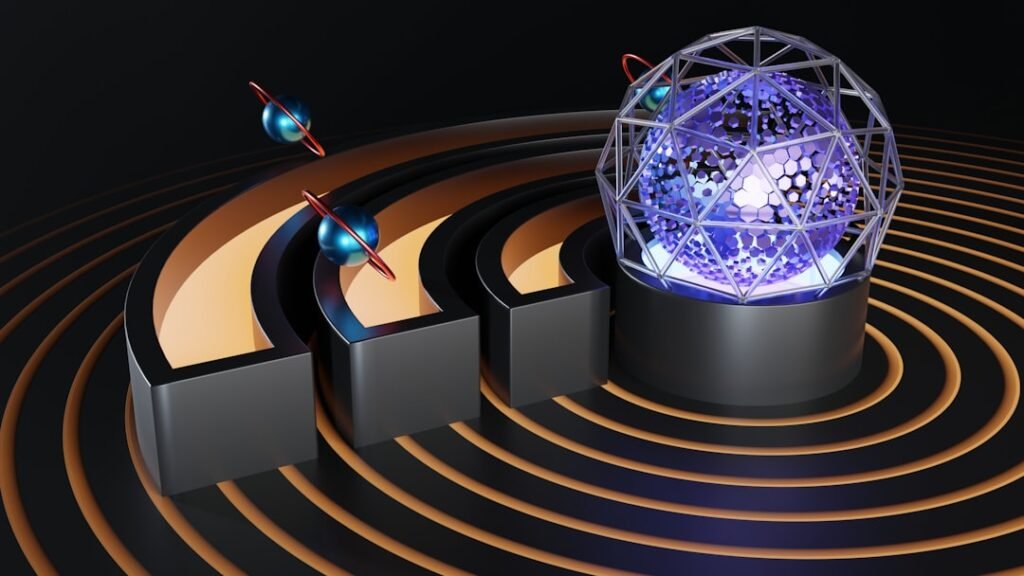
The observation of antimatter wave behavior for the first time represents a profound moment in fundamental physics, echoing the paradigm shifts that defined the 20th century. While our digital economies grapple with the nuances of AI adoption and market dynamics, the bedrock of our physical reality continues to yield astonishing secrets. Researchers have now witnessed wave-like interference in positronium—an exotic “atom” comprising an electron and its antimatter counterpart, a positron—a feat that not only robustly reinforces the counter-intuitive tenets of quantum mechanics but also unlocks unprecedented avenues for scientific inquiry, particularly into how gravity interacts with antimatter. This breakthrough doesn’t just expand our understanding of the universe; it challenges us to reconsider the very fabric of existence, setting the stage for future technological leaps.
1st
Time antimatter wave observed
2
Particles forming positronium
~100
Years since wave-particle duality concept
The Quantum Realm’s Expanding Paradox
For over a century, quantum mechanics has consistently challenged our classical intuition, demonstrating that particles at the atomic and subatomic scales do not behave as discrete, billiard-ball-like objects. Instead, they exhibit a perplexing duality, acting sometimes as particles and other times as waves. This wave-particle duality, first theorized by Louis de Broglie in the 1920s and famously demonstrated by the double-slit experiment with electrons, photons, and even larger molecules, underpins nearly all modern technology, from lasers to semiconductors. Yet, despite its pervasive influence, the philosophical implications of quantum mechanics continue to spark debate, highlighting fundamental fissures in our understanding of reality. The latest revelation, extending this wave-like behavior to antimatter, pushes these paradoxes into an entirely new domain, forcing a re-evaluation of what constitutes ‘matter’ and ‘anti-matter’ at their most fundamental quantum levels. This ongoing redefinition of foundational concepts resonates even in the business world, where the adoption of transformative technologies like AI often encounters cultural differences in AI adoption, requiring a similar flexibility in perspective to integrate new paradigms effectively.
Positronium: Unveiling Antimatter Wave Behavior
The star of this groundbreaking experiment is positronium, an ephemeral, exotic “atom” formed when an electron encounters its antimatter counterpart, a positron. Unlike stable atoms with a nucleus of protons and neutrons, positronium is a purely leptonic system, meaning it contains only electrons and positrons, bound together in a fleeting dance before mutually annihilating into gamma-ray photons. Its short lifespan—typically around 142 nanoseconds for the triplet state—makes it an incredibly challenging subject for observation. Researchers ingeniously designed an interferometer capable of capturing and observing the wave-like interference patterns of positronium. This direct observation of antimatter wave behavior is not merely a confirmation of existing theory; it’s an expansion. Until now, all definitive demonstrations of wave-particle duality involved matter particles. Extending this fundamental property to antimatter confirms a universality that strengthens the theoretical framework of quantum field theory, which posits that all fundamental particles, whether matter or antimatter, are excitations of quantum fields and should therefore exhibit wave-like properties.
Gravity’s Enigma: The Next Antimatter Frontier
Beyond merely confirming quantum mechanics, this breakthrough opens a critical new frontier: directly testing how gravity affects antimatter. While the Standard Model of particle physics and General Relativity are incredibly successful in their respective domains, their unification remains one of the greatest challenges in modern physics. A key question within this grand challenge is whether antimatter falls up or down, or if it interacts with gravity in precisely the same way as matter. Current theories overwhelmingly predict that antimatter should behave identically to matter under gravity, falling “down” towards Earth. However, this has never been directly measured with sufficient precision. Experiments like ALPHA at CERN have begun to measure the gravitational interaction of antihydrogen, but observing the wave-like nature of positronium paves the way for even more sensitive interferometric experiments. Such experiments could, in principle, detect minute differences in gravitational acceleration between matter and antimatter, potentially revealing cracks in our understanding of gravity and space-time itself. This quest for fundamental truths, while seemingly distant from commercial applications, mirrors the relentless pursuit of efficiency in digital domains, where understanding subtle shifts in algorithms can lead to significant gains in areas like AdSense revenue optimization strategies, demonstrating that even abstract scientific inquiry can eventually inform practical optimization.
Implications for Future Intelligence and Technology
While the immediate applications of observing antimatter wave behavior might not be apparent, fundamental breakthroughs in physics historically lay the groundwork for revolutionary technologies. The understanding of electromagnetism led to electricity and telecommunications; quantum mechanics birthed transistors, lasers, and eventually, the digital revolution. This latest discovery could contribute to several long-term technological trajectories. Firstly, it deepens our understanding of quantum coherence and entanglement, crucial for advanced quantum computing architectures. Manipulating antimatter at a quantum level, even if currently theoretical, could lead to entirely new forms of quantum information processing. Secondly, the precise control and observation techniques developed for these experiments could inspire novel sensor technologies with unprecedented sensitivity, capable of detecting minute gravitational anomalies or exotic particles. Thirdly, the very act of pushing the boundaries of quantum mechanics and gravity provides a richer theoretical landscape for artificial intelligence research, especially in areas exploring fundamental emergent properties of complex systems and the simulation of advanced physical phenomena. As AI systems become more sophisticated in modeling complex realities, a more accurate, quantum-informed understanding of the universe provides richer data sets and theoretical constraints for their development. The ability to harness and understand such exotic states of matter and energy could one day underpin propulsion systems, energy generation, or even communication methods that defy current conventional wisdom.
Beyond the Lab: A New Era of Fundamental Physics
The observation of antimatter wave behavior signifies more than just an experimental triumph; it marks a philosophical inflection point. For decades, antimatter has been primarily studied for its particle properties, its annihilation with matter, and its role in the early universe’s matter-antimatter asymmetry puzzle. Now, by demonstrating its wave nature, scientists are exploring antimatter not just as a counterpart to matter, but as a distinct quantum entity with its own unique characteristics and potential for revealing deeper truths about the universe. This opens the door to a new era of fundamental physics where antimatter is not merely a curious anomaly but a powerful probe for investigating the most profound questions: the nature of gravity, the existence of extra dimensions, or even the possibility of subtle violations of fundamental symmetries. The precision required for these experiments pushes the limits of engineering and measurement, fostering innovation in instrumentation that will undoubtedly have spillover effects into other scientific and industrial sectors. Such investigations into the very foundations of physics are critical for maintaining a vibrant scientific ecosystem, inspiring future generations of researchers and engineers to tackle seemingly impossible challenges, much like A Square Solutions aims to inspire businesses to leverage cutting-edge AI for growth.
| Phenomenon | Particles Involved | Significance |
|---|---|---|
| Electron Wave Duality | Electrons | Early confirmation of wave-particle duality (de Broglie, Davisson-Germer) |
| Photon Wave Duality | Photons (Light) | Historically established light’s dual nature (Young, Planck, Einstein) |
| Neutron Wave Duality | Neutrons | Demonstrates wave nature for neutral, massive particles |
| Positronium Wave Duality | Electron-Positron Pair (Antimatter “atom”) | First direct observation of wave-like interference in antimatter system |
“This is more than just another quantum experiment; it’s a foundational step towards understanding the symmetric yet subtly different nature of antimatter. If antimatter truly behaves gravitationally in a way distinct from matter, it would necessitate a radical revision of general relativity and open up entirely new avenues for physics, cosmology, and potentially, future energy and propulsion technologies. The implications are staggering for our understanding of the universe’s fundamental laws.”
— Dr. Anjali Sharma, Theoretical Physicist, Indian Institute of Science
⚛️
Quantum Duality Confirmed
Wave-particle behavior now definitively observed in antimatter, reinforcing quantum mechanics’ universality.
✨
Positronium as a Probe
The electron-positron “atom” provides a unique, ephemeral system for fundamental tests.
🌌
Gravity’s Antimatter Test
New experiments enabled to measure gravity’s effect on antimatter, crucial for unifying physics.
💡
New Technological Paradigms
Foundational insights may lead to breakthroughs in quantum computing, sensing, and AI modeling.
← Scroll to explore →
🚀 How A Square Solutions Can Help
Turn Intelligence Into Business Advantage
We build AI-powered digital growth systems that help businesses in India and globally translate emerging intelligence into revenue — through SEO automation, content systems, web infrastructure, and data analytics.
📢 Also accepting business advertising partnerships — if you want your brand in front of our growing audience of tech decision-makers, get in touch.
Frequently Asked Questions
What is positronium and why is it important for this discovery?
Positronium is an exotic, unstable “atom” composed of an electron and its antimatter counterpart, a positron. It’s crucial because it’s a purely leptonic system (no heavy nucleus) and provides a clean environment to study fundamental interactions between matter and antimatter, especially their quantum properties, without the complexities of protons and neutrons.
Why is observing antimatter wave behavior considered a breakthrough?
While wave-particle duality has been observed for matter particles (like electrons and neutrons) for decades, this is the first time it has been directly observed for an antimatter system (positronium). It confirms the universality of quantum mechanics, extending this fundamental property to antimatter, and strengthens our theoretical understanding of how all fundamental particles behave.
How does this discovery relate to testing gravity’s effect on antimatter?
The ability to observe wave-like interference in positronium opens the door to using interferometric techniques for incredibly precise measurements. These techniques can be adapted to test how gravity influences antimatter, something never directly measured before. Detecting even tiny differences could have revolutionary implications for our understanding of gravity and the universe.
What are the potential long-term implications of this discovery for technology?
While immediate applications are distant, fundamental physics breakthroughs often lead to unforeseen technological revolutions. This discovery could contribute to advancements in quantum computing by enhancing our understanding of coherence, inspire ultra-sensitive sensor technologies, and provide richer theoretical frameworks for advanced AI systems modeling complex physical phenomena. It pushes the boundaries of what is possible, potentially leading to new forms of energy, propulsion, or communication in the far future.
References & Further Reading:
ScienceDaily — Scientists catch antimatter “atom” acting like a wave for the first time |
CERN — Antimatter |
Nature — What is quantum gravity?