
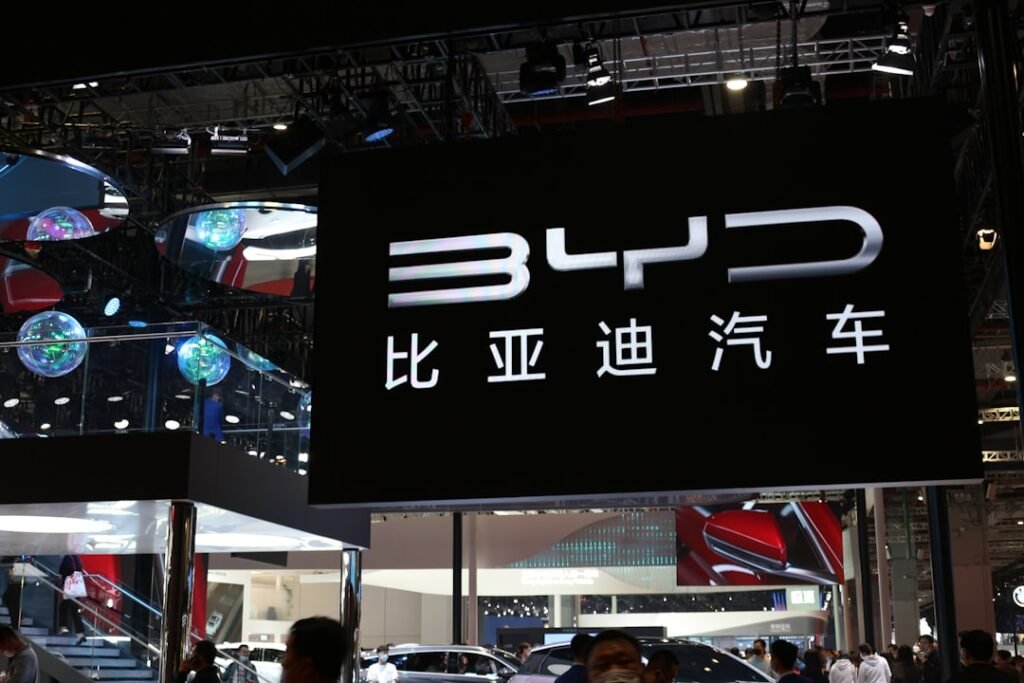
The narrative of global automotive transformation is increasingly defined by companies like BYD, whose strategic positioning for BYD electric vehicle growth underscores a profound shift away from fossil fuels. As rising fuel prices and geopolitical dynamics reshape international markets, the Chinese car giant is demonstrating a robust capability to thrive without direct reliance on the US market, charting an independent course toward sustainable mobility. This approach not only highlights a bold business strategy but also mirrors the broader global imperative for energy independence and environmental stewardship, setting a precedent for future-focused industrial leadership.
5.2M+
EVs & PHEVs Sold by BYD Globally (2023)
30%
Expected Global EV Market Share by 2030
$200B+
BYD Market Capitalization (Peak)
The Geopolitical Chessboard: BYD’s Strategic Autonomy
BYD’s declaration of independence from the US market is not merely a statement of intent but a calculated maneuver within a complex global economic landscape. This strategy is underpinned by a confluence of factors, including the escalating costs of traditional fuels, a universal push for decarbonization, and increasing geopolitical fragmentation. By focusing on markets less entangled in US-China trade tensions, BYD can allocate resources more efficiently towards product development and market expansion in regions with burgeoning EV demand. This approach minimizes regulatory hurdles and tariff risks, allowing for a more streamlined global rollout of its diverse electric vehicle offerings.
The company’s ability to navigate these waters effectively demonstrates a sophisticated understanding of international trade dynamics and an agile supply chain. While some manufacturers might view exclusion from a major market like the US as a significant setback, BYD has reframed it as an opportunity to solidify its position elsewhere, particularly in Europe, Southeast Asia, and Latin America. This diversification not only de-risks its revenue streams but also fosters greater resilience against regional economic downturns or protectionist policies. Just as the scientific community anticipates breakthroughs like the JWST biosignature discovery, the automotive sector is undergoing its own paradigm shift, where strategic independence is becoming as crucial as technological innovation.
Innovation Driving BYD Electric Vehicle Growth
At the core of BYD electric vehicle growth is a relentless pursuit of innovation. Unlike many traditional automakers who rely on external suppliers for key components, BYD boasts an impressive degree of vertical integration. The company designs and manufactures its own batteries (most notably the Blade Battery technology), electric motors, and even semiconductor chips. This comprehensive control over its supply chain provides several distinct advantages: enhanced quality control, reduced production costs, faster iteration cycles, and a significant competitive edge in battery technology, which remains the most critical and expensive component of an EV.
The Blade Battery, in particular, has been a game-changer. Its unique design offers superior safety, longer lifespan, and better energy density compared to traditional lithium-ion batteries. This proprietary technology allows BYD to offer vehicles with competitive range and safety features at a more accessible price point, directly appealing to a broader global consumer base. Furthermore, BYD’s investment in smart manufacturing and advanced robotics optimizes its production efficiency. Optimizing production lines and autonomous driving features often necessitates a critical architectural decision between Edge AI vs Cloud AI, a choice that profoundly impacts latency, data processing capabilities, and overall system responsiveness in next-generation vehicles.
Global Market Penetration: Beyond the US Horizon
BYD’s global market penetration strategy is characterized by adaptability and a deep understanding of regional specificities. Instead of a one-size-fits-all approach, the company tailors its product offerings and marketing strategies to resonate with local preferences and regulatory environments. In Europe, for instance, BYD is introducing a range of sophisticated electric sedans and SUVs designed to meet discerning consumer tastes for premium features and performance. In developing markets across Asia, Africa, and Latin America, the focus often shifts to affordability, reliability, and robust utility vehicles, including electric buses and commercial fleets, where BYD has already established a dominant presence.
This localized strategy is bolstered by strategic partnerships and local manufacturing investments. Building factories and establishing R&D centers in key regions not only reduces import duties and logistical costs but also creates local jobs and fosters goodwill, mitigating potential protectionist sentiments. This distributed manufacturing model is crucial for sustaining the rapid BYD electric vehicle growth trajectory. By establishing a strong foothold in diverse markets, BYD is building a resilient global network that can withstand economic fluctuations in any single region, ensuring sustained expansion and market leadership in the long term.
“BYD’s vertical integration and strategic pivot away from the US market demonstrate a profound understanding of future mobility economics. Their ability to control the entire production chain, from batteries to semiconductors, provides an unparalleled advantage in cost, innovation, and supply chain resilience, positioning them as a formidable global leader in the EV revolution.”
— Dr. Arvind Kumar, Automotive Industry Analyst
A Sustainable Future, Strategically Secured
BYD’s commitment to electric vehicles extends beyond commercial ambition; it is deeply intertwined with the global imperative for sustainability. The company’s vision for a fossil-free future is not just a marketing slogan but a guiding principle embedded in its product development and operational strategies. By offering a comprehensive suite of new energy vehicles—from passenger cars and buses to trucks and forklifts—BYD is actively contributing to the decarbonization of transportation sectors worldwide. This holistic approach to green mobility positions BYD not just as a car manufacturer, but as a key enabler of sustainable urban development and industrial transformation.
The increasing global awareness of climate change and the urgency of reducing carbon emissions provide a powerful tailwind for BYD’s strategy. Governments worldwide are implementing stricter emission standards and offering incentives for EV adoption, creating a fertile ground for market expansion. BYD’s diversified product portfolio and its ability to scale production rapidly allow it to capitalize on these trends effectively. Furthermore, the company’s investments in renewable energy solutions, such as solar power and energy storage systems, underscore its broader commitment to a sustainable energy ecosystem, reinforcing its brand as a leader in comprehensive green technology solutions.
Vertical Integration
BYD controls its entire supply chain, from batteries (Blade Battery) to semiconductors, ensuring cost efficiency and rapid innovation.
Global Diversification
Strategic focus on Europe, Asia-Pacific, and Latin America reduces reliance on any single market, enhancing resilience.
Battery Technology
Proprietary Blade Battery offers superior safety, lifespan, and energy density, providing a distinct competitive edge.
Smart Manufacturing
Advanced AI and robotics optimize production, leading to higher efficiency and faster time-to-market for new models.
The Future of Mobility: AI and Digital Growth
The trajectory of BYD electric vehicle growth is inextricably linked to the advancements in Artificial Intelligence and digital transformation. Modern EVs are essentially computers on wheels, generating vast amounts of data from sensors, driving patterns, and infotainment systems. Leveraging this data through AI-powered analytics is crucial for improving vehicle performance, enhancing safety features, and personalizing the user experience. BYD’s commitment to innovation extends to integrating sophisticated AI systems for everything from predictive maintenance and battery management to autonomous driving capabilities.
Digital growth also plays a pivotal role in BYD’s customer engagement and operational efficiency. Online sales platforms, intelligent supply chain management, and data-driven marketing strategies are essential for reaching a global audience and maintaining a competitive edge. As the automotive industry continues its rapid evolution, the fusion of advanced AI with robust digital infrastructure will define the next generation of mobility leaders. Companies that can effectively harness these technologies will not only produce superior vehicles but also build more resilient and responsive business ecosystems, driving sustainable growth in an increasingly complex world.
🚀 A Square Solutions
We specialise in AI-Powered Digital Growth Systems — helping businesses scale using intelligence, automation, and infrastructure.
Frequently Asked Questions
Why is BYD focusing on non-US markets?
BYD’s strategy to thrive without the US market is driven by several factors, including minimizing exposure to US-China trade tensions, navigating complex regulatory environments, and focusing resources on rapidly growing EV markets in Europe, Asia, and Latin America. This allows for more streamlined expansion and greater strategic autonomy.
What gives BYD a competitive edge in the EV market?
BYD’s significant competitive advantage stems from its extensive vertical integration. The company designs and manufactures its own core components, including batteries (like the Blade Battery), electric motors, and semiconductors. This control over the supply chain leads to lower costs, higher quality control, and faster innovation cycles compared to competitors.
How does BYD contribute to global sustainability?
BYD is a major contributor to global sustainability by offering a comprehensive range of new energy vehicles, including electric cars, buses, trucks, and forklifts, significantly reducing carbon emissions from transportation. Additionally, the company invests in renewable energy solutions like solar power and energy storage, promoting a broader green energy ecosystem.
What role does AI play in BYD’s growth strategy?
AI is crucial for BYD’s growth, enhancing vehicle performance, safety, and user experience through data analytics from sensors and driving patterns. AI powers features like predictive maintenance, battery management, and autonomous driving. Digital growth, including online sales and smart supply chains, further supports its global market penetration and operational efficiency.
Reference Sources: Reuters, International Energy Agency (IEA), Bloomberg