
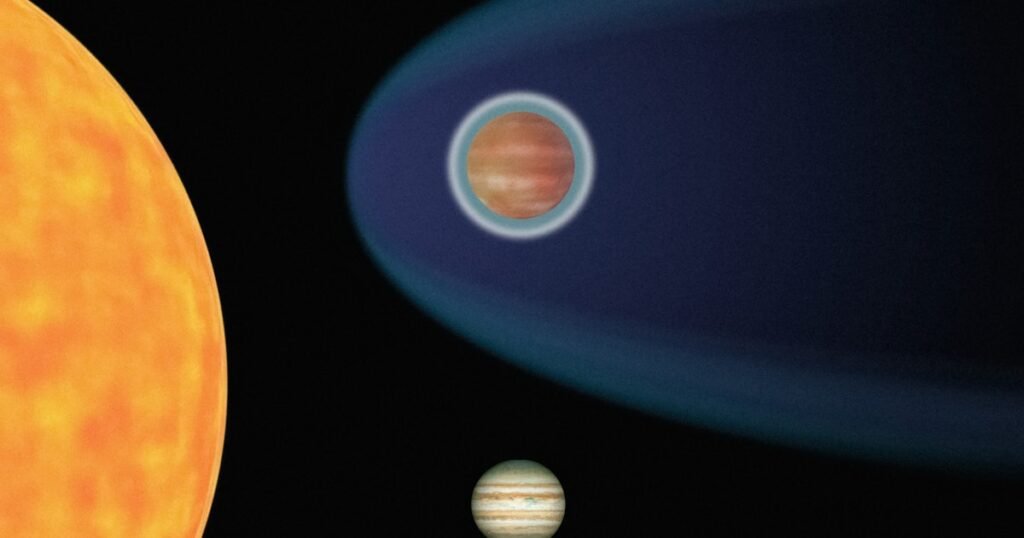
A molecule almost exclusively produced by life on Earth has been detected in the atmosphere of a distant exoplanet — a world far larger than our own, orbiting a red dwarf star 120 light-years away. The James Webb Space Telescope (JWST) has identified the tentative presence of dimethyl sulfide (DMS) on a “sub-Neptune” planet known as TOI-270d. This landmark discovery, published in Nature Astronomy, challenges long-held assumptions about where the conditions for life might exist and dramatically expands the range of worlds astronomers will now scrutinise in the search for extraterrestrial life.
120
Light-years away from Earth
Prefer to have experts handle this? A Square Solutions offers professional our services for growing businesses.
2.5×
Earth’s radius — sub-Neptune class
DMS
Dimethyl sulfide detected — Earth’s biological marker
A Surprising Chemical Cocktail in a Distant Atmosphere
📚 Further Reading from A Square Solutions
The research team, led by Professor Nikku Madhusudhan at the University of Cambridge, detected a rich atmospheric composition using JWST’s Near-Infrared Spectrograph (NIRSpec). The planet’s atmosphere contains significant amounts of methane (CH₄) and carbon dioxide (CO₂) — a combination chemistry models suggest requires a biological process to sustain. Most striking, however, is the tentative detection of dimethyl sulfide (DMS).
On Earth, DMS is produced almost entirely by marine phytoplankton as part of the global sulphur cycle. It plays a crucial role in cloud formation and climate regulation. The detection of this molecule in an alien atmosphere does not confirm life — but it represents precisely the type of biosignature scientists have theorised should be the target of next-generation telescopes. The same era of astronomical instrumentation that revealed gravitational waves is now opening a new window into the chemistry of distant worlds.
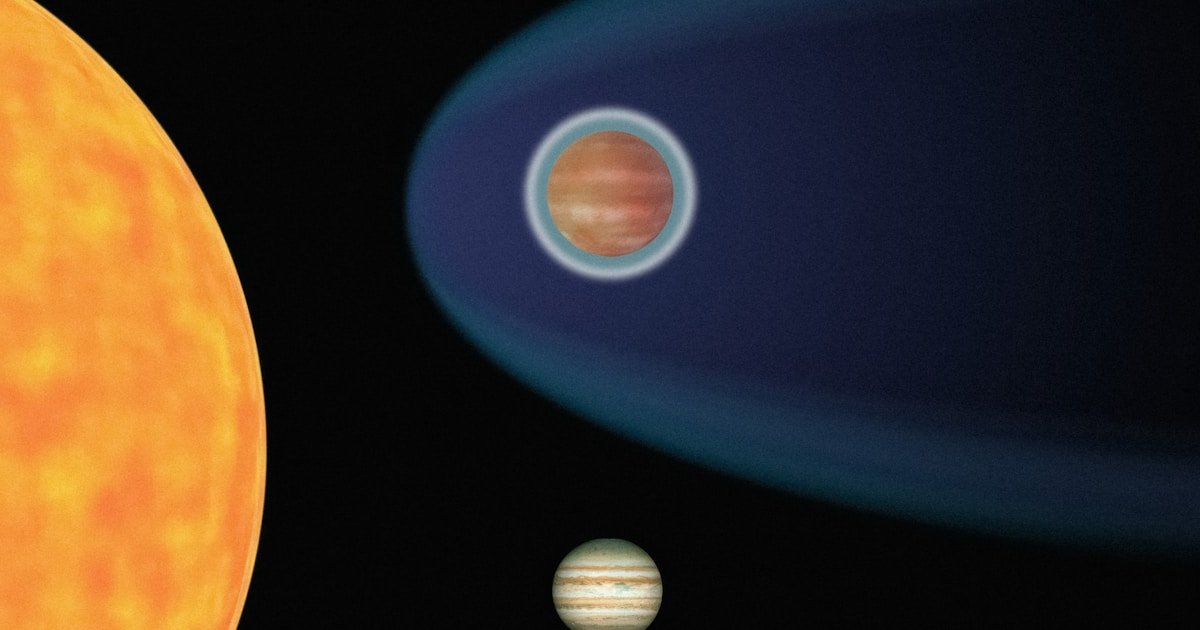
How Webb Pinpointed These Faint Signals
Transmission spectroscopy is JWST’s key technique: when TOI-270d passes in front of its host star during a transit, a tiny fraction of starlight filters through its atmosphere. Different molecules absorb light at specific wavelengths, leaving unique spectral fingerprints. JWST’s instruments — particularly NIRSpec — are sensitive enough to read these fingerprints from 120 light-years away with a precision no previous telescope has achieved.
The team also noted a conspicuous absence of ammonia (NH₃). Chemical models predict that ammonia should be abundant in a hydrogen-rich atmosphere. The researchers theorise that a vast liquid water ocean may be dissolving the ammonia, suppressing its atmospheric abundance. This supports the hypothesis that TOI-270d is a “Hycean” world — a hot, ocean-covered planet with a hydrogen-dominant atmosphere.
🌊
Hycean World
A hot ocean-covered planet with hydrogen-rich atmosphere — TOI-270d fits this category perfectly.
🦠
Dimethyl Sulfide (DMS)
On Earth, DMS is produced almost exclusively by marine phytoplankton. Detecting it elsewhere is extraordinary.
🔭
JWST’s Power
Webb uses transmission spectroscopy — measuring starlight filtered through a planet’s atmosphere during transit.
⚗️
Chemical Cocktail
Methane, CO₂, and possible DMS — a combination that chemistry models say should not exist without biology.
← Scroll to explore →
What the Discovery Means — and What It Does Not
Scientists are deliberately cautious. The DMS detection is described as tentative — the signal is statistically significant but not confirmed at the threshold required to rule out abiotic (non-biological) alternatives. Unknown photochemical or geological processes could potentially produce DMS without biology. Further observations — ideally with additional JWST time and cross-instrument verification — will be necessary before any conclusion can be made.
What is not tentative is the broader implication: the Webb Telescope biosignature research programme has demonstrated that Hycean worlds are now firmly in the frame as targets for life detection. This dramatically expands the search beyond Earth-like rocky planets in traditional habitable zones. For the scientific community, TOI-270d — previously classified as too warm and too large to support life — has been promoted to a high-priority follow-up target. Astronomers tracking biologically inspired systems and AI-driven research methods are paying close attention to how machine learning might accelerate the analysis of future spectral data.
“This is a watershed moment in the search for life beyond our solar system. We are not claiming to have found life — but we are saying we have found exactly the kind of chemical environment that deserves the most careful and sustained attention we can give it.”
— Professor Nikku Madhusudhan, University of Cambridge
What Comes Next
The Cambridge team has already secured additional JWST observation time to gather higher signal-to-noise spectroscopic data. If the DMS detection is confirmed at greater statistical significance, it will trigger a global scientific response — prioritising TOI-270d across multiple ground and space-based observatories. The intersection of AI and scientific discovery means the speed of that analytical response will be faster than at any previous point in the history of astronomy.
Beyond TOI-270d, the methodology now established by this research will be applied to dozens of Hycean-class worlds in JWST’s target catalogue. The question humanity has asked for centuries — are we alone? — now has a methodological framework for receiving an evidence-based answer within our lifetimes.
🚀 A Square Solutions
We specialise in AI-Powered Research & Analytics — helping businesses apply emerging technology intelligence to build competitive advantage.
Frequently Asked Questions
What did the Webb Telescope detect on TOI-270d?
The James Webb Space Telescope (JWST) detected a tentative signal for dimethyl sulfide (DMS) — a molecule produced almost exclusively by marine life on Earth — in the atmosphere of TOI-270d, a sub-Neptune exoplanet 120 light-years away. It also confirmed significant amounts of methane and carbon dioxide.
What is a Hycean world?
A Hycean world is a type of exoplanet theorised to be covered entirely by a vast liquid water ocean beneath a hydrogen-rich atmosphere. TOI-270d fits this category, which researchers believe could support certain forms of microbial life. The term comes from “hydrogen” and “ocean.”
Does this discovery confirm life beyond Earth?
Not definitively — the DMS detection is described as tentative and requires further confirmation. Scientists are cautious: abiotic (non-biological) sources of DMS cannot yet be ruled out. However, the combination of methane, CO₂, and possible DMS — alongside the absence of ammonia — is considered a compelling biosignature precursor worthy of intensive follow-up study.
How does JWST detect molecules in distant atmospheres?
JWST uses transmission spectroscopy: when a planet transits (passes in front of) its star, some starlight filters through the planet’s atmosphere. Different molecules absorb light at specific wavelengths, leaving distinct “fingerprints” in the spectrum that JWST’s instruments can identify with unprecedented precision.
Reference Sources:
NASA Official |
European Space Agency |
Nature Astronomy Journal
💬 Questions about this discovery?
Use the 🤖 Ask Our AI widget (bottom-right) — instant answers, 24/7.
Need help with AI, web, or SEO?
A Square Solutions builds AI products, high-performance websites, and SEO systems. Book a free, no-obligation consultation.
Subscribe to our newsletter
Practical updates on AI, web, and SEO — no spam.