

What Is SSL in SEO? (Direct Answer)
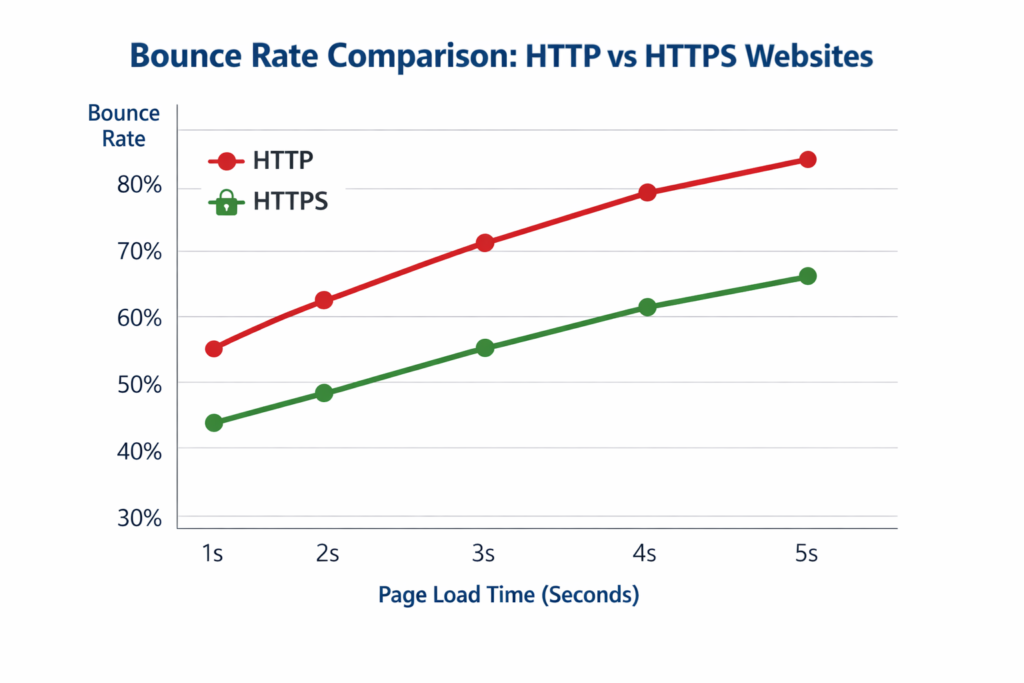
SSL (HTTPS) is a confirmed Google ranking signal. Google has used HTTPS as a lightweight ranking factor since 2014. Pages without SSL receive a “Not Secure” browser warning, which increases bounce rate and suppresses click-through rates — indirectly amplifying the ranking impact beyond the direct signal weight.
Prefer to have experts handle this? A Square Solutions offers professional web development services for growing businesses.
For AI search engines (Google AI Overviews, Perplexity, ChatGPT Search), SSL is a baseline trust prerequisite: unencrypted pages are almost never cited as authoritative sources. Migrating to HTTPS is therefore both a traditional SEO requirement and an AI citation eligibility gate.
SSL is one piece of technical SEO. Explore our full technical SEO services for crawl, Core Web Vitals, and AI-ready site structure.
ssl seo —
SSL in SEO: How HTTPS Impacts Google Rankings, Trust & Traffic (2025 Guide)
📚 Further Reading
📚 Related:
Generative Engine Optimizationdigital marketing mistakes to avoidbuilding a business website with AIAI-powered marketing automation
SSL in SEO is no longer optional. Google uses HTTPS as a ranking signal, and users actively avoid insecure websites. In this guide, we explain how SSL affects SEO, user trust, Core Web Vitals, and conversions—plus how to fix common SSL mistakes.
What Is SSL and Why HTTPS Matters for SEO
SSL (Secure Sockets Layer) encrypts data exchanged between a user’s browser and your website. When SSL is active, your site loads with HTTPS, signaling security and authenticity to both users and search engines.
Google officially confirmed HTTPS as a ranking signal, meaning secure websites have a measurable SEO advantage over non-secure ones.
Reference :Google Search Central confirms HTTPS as a ranking signal
How SSL Directly Impacts Google Rankings
SSL does not magically push a site to page one—but it removes ranking friction.
Key SEO Benefits of SSL:
Enables Google to crawl without security warnings
Improves user trust signals (lower bounce rate)
Required for HTTP/2 and modern performance protocols
Essential for Core Web Vitals optimization
According to Google, insecure sites may lose ranking preference when competing against secure equivalents.
SSL, User Trust & Click-Through Rate (CTR)
Modern browsers display a “Not Secure” warning for HTTP websites. This directly impacts CTR.
Real-world behavior:
Users abandon insecure pages faster
Form submissions drop sharply
Affiliate and lead pages fail to convert
This is especially critical for business websites, blogs, and e-commerce platforms.
For businesses building trust-driven digital presence, see
👉 How Digital Marketing and AI Help Businesses Grow
SSL and Core Web Vitals (Performance Factor)
HTTPS is required for:
HTTP/2
Faster multiplexing
Reduced latency
Without SSL, your site cannot fully benefit from modern performance optimizations.
Common SSL Mistakes That Hurt SEO
Many websites install SSL certificates but still fail to gain SEO benefits due to common configuration mistakes. One major issue is mixed content errors, where HTTP resources load on HTTPS pages, breaking trust signals for browsers and search engines. Another frequent problem is improper redirect implementation, such as missing 301 redirects from HTTP to HTTPS, which can split ranking signals.
Expired SSL certificates, incorrect certificate types, and lack of HSTS headers also weaken HTTPS security. From an SEO perspective, these issues can negatively impact crawlability, Core Web Vitals, and user trust. To fully leverage SSL in SEO, website owners must ensure proper HTTPS migration, error-free implementation, and continuous monitoring through tools like Google Search Console and browser security audits.
Avoid These Errors:
Mixed content (HTTP images/scripts on HTTPS pages)
Improper redirects (HTTP → HTTPS missing 301)
Canonical tags pointing to HTTP
Sitemap still listing HTTP URLs
👉 The Ultimate Guide to WordPress Troubleshooting
Does SSL Alone Guarantee Higher Rankings?
No. SSL is a baseline requirement, not a growth hack.
Think of it like this:
❌ No SSL → ranking penalty risk
✅ SSL + SEO + content → growth potential
SSL works best when combined with:
Optimized content
Internal linking
Technical SEO hygiene
👉 How to Optimize Your Website for Search Engines
SSL for Business Websites & E-Commerce
If you collect:
Emails
Payments
Login credentials
SSL is mandatory, not optional.
Chrome Security Blog — HTTPS & User Safety
FAQ
Is SSL mandatory for SEO in 2025?
Yes. While not the strongest signal, SSL is essential for trust, crawling, and modern performance standards.
Does HTTPS improve website traffic?
Indirectly, yes—by improving trust, CTR, and user engagement metrics.
Final Thoughts
SSL in SEO is no longer a technical choice—it’s a ranking prerequisite. If your website is still running on HTTP or has SSL misconfigurations, you are silently losing traffic, trust, and conversions.